

Why use herbal extracts for health and vitality?
TL;DR:
- Herbal extracts concentrate plant bioactive compounds, providing higher potency and standardised dosing benefits over whole herbs. They are produced by solvent extraction, which breaks down plant cell walls and captures a broad spectrum of phytochemicals, resulting in faster absorption and clinical reliability. Proper selection, standardisation, and adherence to dosage guidelines ensure safe and effective use for targeted health goals.
Herbal extracts are concentrated plant compounds produced by drawing bioactive molecules out of raw plant material, leaving behind inert fibre and delivering a potent, standardised dose. The core reason to use them over whole herbs is simple: extraction increases the concentration of therapeutic compounds by 5–50 times compared to dried powders, making smaller doses clinically meaningful. Ashwagandha (Withania somnifera) is a clear example. Its withanolide compounds, which drive adaptogenic and anti-inflammatory effects, are present in far greater quantities in a standardised extract than in the raw root. For anyone seeking natural support for vitality, stress resilience, or healthy ageing, understanding why herbal extracts outperform other forms is the logical starting point. Vivetus covers the full picture of herbal supplement benefits and risks for those who want to go deeper.
What are herbal extracts and how are they made?
Herbal extracts are produced by soaking plant material in a solvent, typically water, ethanol, or a combination of both, to pull bioactive compounds out of the plant matrix. The resulting liquid is either used directly as a tincture or further processed into a dry powder by removing the solvent. The choice of solvent determines which compounds are captured.
The role of ethanol in extraction
Ethanol dissolves both water-soluble compounds such as polysaccharides and glycosides, and fat-soluble compounds such as resins and essential oils. This intermediate polarity makes it uniquely suited for producing broad-spectrum extracts that capture a plant’s full phytochemical profile. Water alone misses lipophilic compounds. Oil-based extractions miss water-soluble ones. Ethanol captures both in a single pass.
How extraction bypasses biological barriers
One underappreciated advantage of extraction is its ability to break down plant cell walls that the human digestive system cannot process. Medicinal mushrooms are the clearest example. Their cell walls are made of chitin, the same structural material found in insect exoskeletons. Chitin is indigestible by humans, so consuming raw or dried mushroom powder delivers far fewer bioactives than a properly extracted product. Extraction dissolves the chitin barrier and releases the beta-glucans and triterpenes locked inside.
The main forms you will encounter are:
- Tinctures: Liquid extracts in ethanol or glycerine, taken sublingually or diluted in water
- Standardised dry extracts: Powders with a guaranteed percentage of a key active compound, used in capsules and tablets
- Full-spectrum extracts: Retain the complete phytochemical profile of the original plant
- Whole herb powders: Ground dried plant material with no concentration step
Pro Tip: When reading a supplement label, look for a stated extract ratio such as 10:1 or a standardised percentage such as “5% withanolides.” These figures confirm the product has undergone genuine extraction rather than simple grinding.
Why use herbal extracts: benefits over whole herbs
The primary advantage of herbal extracts for health is precision. Standardised extracts provide reproducible dosing and clinical reliability that whole herbs cannot match. Clinical trials rely on standardised extracts for exactly this reason. When a study reports that Ashwagandha reduces cortisol markers, it is almost always using a standardised extract with a defined withanolide content, not raw root powder.

Extracts vs whole herbs: a direct comparison
| Feature | Standardised extract | Whole herb or powder |
|---|---|---|
| Potency | 5–50x more concentrated | Baseline concentration |
| Dosing consistency | Guaranteed per batch | Variable by harvest and season |
| Onset speed | 15–30 min (sublingual) | 30–60 min (oral) |
| Best use case | Targeted therapeutic goals | General, gentle daily wellness |
| Side effect risk | Higher if misused | Lower due to dilution |
The table above makes the trade-off clear. Extracts deliver more with less, but that concentration demands respect. Higher potency increases the risk of side effects if dosage guidance is ignored, in the same way that a pharmaceutical drug differs from a dietary food source of the same compound.
The advantages of herbal extracts for most health-focused users include:
- Greater bioavailability: Bioactive compounds reach the bloodstream faster and in higher quantities
- Smaller effective dose: A 500 mg capsule of a 10:1 extract delivers the equivalent of 5 g of dried herb
- Longer shelf life: Removing water and plant matter reduces oxidation and microbial degradation
- Clinical reproducibility: You can replicate the conditions of published studies when using the same standardized form
Broad-spectrum extracts offer a middle ground. They preserve secondary compounds alongside primary actives, maintaining the natural synergy of the plant while still concentrating the overall phytochemical load. Clinicians tend to prefer standardized extracts for targeted outcomes, while whole herbs suit gentle, general wellness support.
Pro Tip: If you have compromised digestion or are managing a specific health concern, liquid tinctures taken sublingually are the most reliable delivery method. They bypass first-pass liver metabolism and reach the bloodstream in 15–30 minutes.
What phytochemicals in herbal extracts support health?
Phytochemicals are the bioactive molecules in plants that produce measurable effects in the human body. Alkaloids, flavonoids, terpenoids, and phenolics each act on distinct biological pathways, including reducing oxidative stress, modulating immune responses, and regulating metabolic function. The therapeutic potential of herbal extracts comes directly from the concentration and diversity of these compounds.
Key phytochemical groups and their effects
| Phytochemical class | Primary biological activity | Example plant source |
|---|---|---|
| Flavonoids | Antioxidant, anti-inflammatory | Rosemary, green tea |
| Terpenoids | Adaptogenic, anti-tumor | Ashwagandha, Ginkgo biloba |
| Alkaloids | Neurological modulation | Valerian, Berberine-containing herbs |
| Phenolics | Antimicrobial, antioxidant | Thyme, oregano |
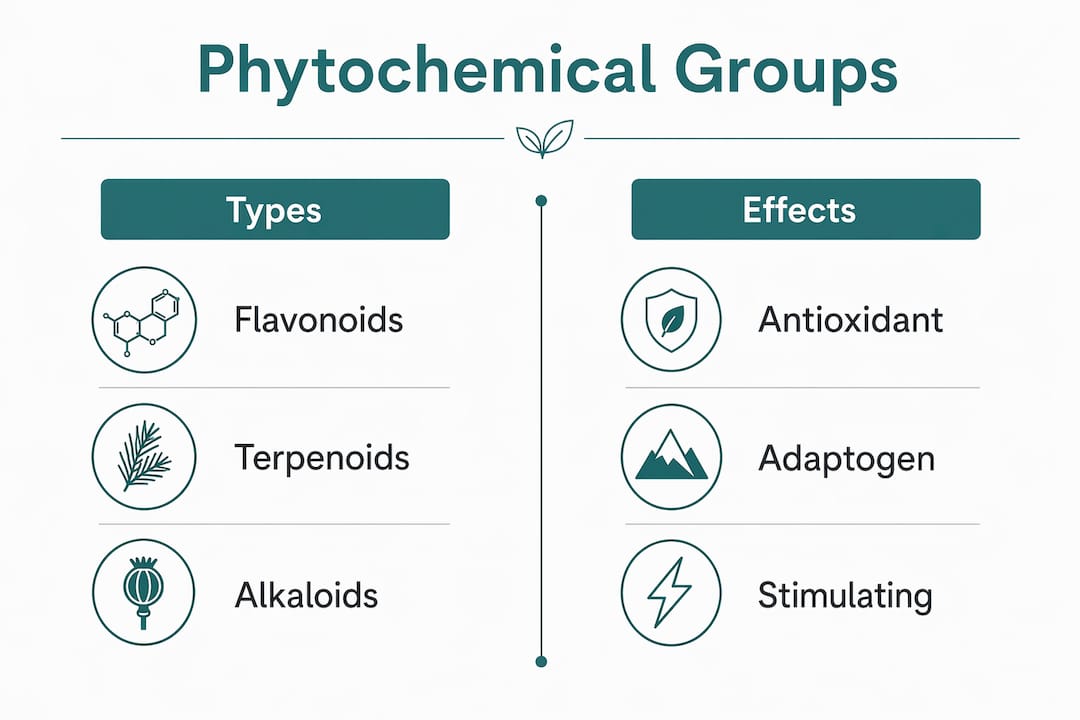
Oxidative stress is a central driver of cellular aging. Flavonoids and phenolics neutralize free radicals before they damage DNA and mitochondrial membranes. This is why rosemary and thyme extracts appear repeatedly in research on anti-inflammatory and antioxidant support. The concentration of these compounds in an extract is far higher than in the culinary quantities most people consume.
Terpenoids, particularly the withanolides in Ashwagandha, work on multiple pathways at once. They modulate the HPA axis to reduce cortisol output, support natural killer cell activity in the immune system, and reduce markers of systemic inflammation. This multi-pathway action is what makes certain herbal extracts relevant to longevity research, not just acute symptom management.
The diversity of phytochemical profiles also explains why extracts support faster bioavailability and greater clinical reliability, particularly in people with compromised digestion or those managing specific health targets.
How to choose and use herbal extracts safely
Choosing the right extract form depends on your health goal. For targeted outcomes such as stress reduction or cognitive support, a standardized extract with a defined active percentage is the correct choice. For general daily wellness, a full-spectrum or broad-spectrum extract preserves more of the plant’s natural compound balance.
Follow these steps when selecting and using herbal extracts:
- Check for standardization. Look for a stated active compound percentage on the label, such as “KSM-66 Ashwagandha, 5% withanolides.” This confirms the product meets a defined potency threshold.
- Match the form to your goal. Sublingual tinctures deliver the fastest onset at 15–30 minutes. Capsules and tablets are more convenient for daily maintenance dosing.
- Respect dosage thresholds. Anti-inflammatory effects from single herbs require up to 3 g per day, while herbal blends may require up to 6.6 g per day. Exceeding these thresholds does not increase benefits and raises the risk of adverse effects.
- Prioritize quality markers. For mushroom extracts, confirm the product uses fruiting body rather than mycelium grown on grain. The latter contains far fewer active beta-glucans and is often not clearly disclosed on labels.
- Integrate with lifestyle. Herbal extracts support health outcomes most effectively when combined with adequate sleep, a nutrient-dense diet, and regular physical activity. They are not a substitute for these foundations.
Pro Tip: Start with one extract at a time for four to six weeks before adding another. This allows you to clearly assess its effects and identify any sensitivities before combining compounds.
Common herbal extracts and their vitality benefits
Several herbal extracts have strong research backing for specific health and vitality benefits. These are the most relevant for anyone focused on healthy aging and long-term wellbeing.
- Ashwagandha (Withania somnifera): Adaptogenic, immunomodulatory, and antioxidant effects make it one of the most studied extracts for stress resilience, physical performance, and longevity support. Its withanolides reduce cortisol, aid muscle recovery, and modulate immune function.
- Ginkgo biloba: Terpenoid lactones and flavonol glycosides in standardized Ginkgo extracts support cerebral blood flow and cognitive function. It is one of the most prescribed herbal extracts in European clinical practice.
- Rosemary (Rosmarinus officinalis): Rich in rosmarinic acid and carnosic acid, rosemary extract provides antioxidant and anti-inflammatory benefits important for cardiovascular and neurological health.
- Thyme (Thymus vulgaris): Thymol and carvacrol, the primary phenolic compounds in thyme extract, show antimicrobial and anti-inflammatory properties in multiple research reviews.
- Saw Palmetto (Serenoa repens): Liposterolic extract of saw palmetto is widely used for prostate health support in men, with evidence pointing to its effect on 5-alpha reductase activity.
For those interested in how adaptogens like Ashwagandha work within a broader supplement program, Vivetus has a detailed guide on adaptogen science and vitality.
Key takeaways
Herbal extracts deliver concentrated, standardized phytochemicals that outperform whole herbs for targeted health outcomes, faster absorption, and clinical reproducibility.
| Point | Details |
|---|---|
| Extraction increases potency | Extracts are 5–50 times more concentrated than dried herb powders. |
| Standardized dosing matters | Standardized extracts allow you to replicate clinical study results reliably. |
| Sublingual delivery is fastest | Tinctures taken under the tongue act within 15–30 minutes, faster than capsules. |
| Phytochemicals target multiple pathways | Flavonoids, terpenoids, and phenolics each act on distinct biological systems simultaneously. |
| Concentration requires caution | Higher potency raises side effect risk if dosage guidelines are not followed. |
Where science meets traditional herbalism
I have spent years reviewing supplement research, and the most consistent pattern I see is this: people either dismiss herbal extracts as unscientific folklore or treat them as infallible natural cures. Both positions are wrong.
The science on standardized extracts is genuinely strong in specific areas. Ashwagandha’s cortisol-modulating effects are well-documented. Ginkgo biloba’s influence on cerebral circulation has decades of clinical data behind it. These are not anecdotal claims. They are reproducible findings from controlled trials using defined extract forms.
What I find underappreciated is the quality gap within the extract category itself. Two products both labeled “Ashwagandha extract” can differ enormously in withanolide content depending on whether the manufacturer used a genuine extraction process or simply milled the root into a fine powder. The label rarely tells you which you are getting unless you know what to look for.
My view is that the consumer trend toward herbal extracts is well-founded, but it needs to be paired with label literacy. Broad-spectrum extracts from reputable suppliers, with stated standardization figures and transparent sourcing, are where the genuine benefit lies. The growing body of research on phytochemicals and longevity supports this direction. The key is choosing products that reflect that science rather than simply trading on the category’s reputation.
— Jord
Explore herbal extract supplements at Vivetus

Vivetus curates a range of dietary supplements built around the same principles covered in this article: standardised extracts, transparent potency figures, and formulations aligned with current research on vitality and healthy ageing. Whether you are looking at Ashwagandha for stress resilience, Ginkgo biloba for cognitive support, or antioxidant-rich botanical extracts, the Vivetus catalogue is organised to help you make an informed choice. Free shipping applies to orders over €50. Browse the full supplement range at Vivetus and find products matched to your specific health goals. For a broader view of what the evidence says about ageing well, the 2026 graceful ageing guide is a practical next step.
FAQ
What are herbal extracts used for?
Herbal extracts are used to deliver concentrated plant compounds for targeted health outcomes including stress reduction, anti-inflammatory support, cognitive function, and immune modulation. They are preferred over whole herbs when a specific therapeutic effect is the goal.
How do herbal extracts work in the body?
Herbal extracts deliver phytochemicals such as flavonoids, terpenoids, and alkaloids directly into the bloodstream, where they act on biological pathways including oxidative stress reduction and immune regulation. Sublingual tinctures bypass liver metabolism and produce effects within 15–30 minutes.
Are herbal extracts safer than synthetic supplements?
Herbal extracts are natural in origin but carry their own risks when misused. Higher concentration means higher side effect potential compared to whole herbs, so following stated dosage guidelines is necessary for safe use.
What is the difference between a tincture and a standardised extract?
A tincture is a liquid extract in ethanol or glycerine, taken sublingually or diluted in water. A standardised extract is a dry powder with a guaranteed percentage of a specific active compound, used in capsules and tablets for consistent dosing.
How do I know if an herbal extract is good quality?
Look for a stated standardisation figure on the label, such as “5% withanolides” or a defined extract ratio like 10:1. For mushroom extracts, confirm the product uses fruiting body material rather than mycelium grown on grain, as the latter contains significantly fewer active compounds.