

Role of minerals in health: what you need to know
TL;DR:
- Minerals are essential elements that support bone health, immune function, and blood oxygen transport. A balanced diet usually covers mineral needs, but certain groups require monitoring for deficiencies in iron, iodine, calcium, and magnesium. Excessive intake from supplements or food can pose health risks, so clinical testing and guidance are recommended before supplementation.
Minerals are the structural and regulatory backbone of human physiology, supporting everything from bone density and oxygen transport to enzyme activity and immune signalling. A varied, whole-food diet covers most mineral needs for healthy adults, but specific groups — including older adults, pregnant women, and those following restrictive diets — often require closer attention to iron, iodine, calcium, and magnesium. The European Food Safety Authority (EFSA) frames mineral intake through Dietary Reference Values (DRVs) and Tolerable Upper Intake Levels (ULs), making it clear that both deficiency and excess carry real health risks.
Priority minerals to watch:
- Iron and iodine are the most commonly deficient minerals in Central Europe, particularly in women of reproductive age and populations relying on non-iodised salt.
- Calcium and magnesium become increasingly important after 40, when absorption efficiency tends to decline.
- Zinc and selenium are critical for immune function and antioxidant defence.
Quick dietary action: Build meals around dairy or fortified plant milks, legumes, wholegrains, oily fish, and nuts. Use iodised salt. Eat vitamin C-rich foods alongside plant-based iron sources.
When to see a clinician: Persistent fatigue, poor wound healing, hair loss, or muscle cramps warrant a blood test before reaching for supplements. Vivetus recommends a food-first approach and clinician-confirmed shortfalls before starting any targeted supplementation.
Table of Contents
- What are minerals and why does your body need them?
- A practical guide to major minerals and key trace elements
- How minerals support your bones, immune system, muscles, and blood
- How does your body absorb minerals, and what affects bioavailability?
- Recommended intakes, deficiency signs, and when to get tested
- Practical food strategies to meet your mineral needs
- When are mineral supplements appropriate, and how do you choose safely?
- Minerals and healthy ageing: what current research shows
- Key takeaways
- A note on editorial approach
- Vivetus Energy & Vitality bundel: targeted support for active adults
- Useful sources and further reading
What are minerals and why does your body need them?
Minerals are essential, inorganic elements that the body cannot synthesise and must obtain entirely from food or water. Unlike vitamins, they are not broken down by heat or light, which makes them relatively stable across cooking methods. Their roles span structural functions (bones, teeth), regulatory functions (nerve transmission, fluid balance), and catalytic functions (enzyme activation, hormone synthesis).
EFSA classifies dietary minerals into two groups based on the daily quantity required:
- Major minerals (macrominerals): needed at 100 mg per day or more. These include calcium, phosphorus, magnesium, potassium, sodium, chloride, and sulphur.
- Trace minerals (microminerals): needed in amounts below 100 mg per day. Key examples include iron, zinc, iodine, selenium, copper, manganese, chromium, molybdenum, and fluoride.
The distinction reflects required quantity, not physiological importance. A trace element like iodine, needed in micrograms, is no less critical than calcium, needed in grams.
EFSA’s DRV framework sets Population Reference Intakes (PRIs) as the target for most healthy individuals, and ULs as the ceiling above which adverse effects become a realistic risk. Both figures apply across food, fortified products, and supplements combined. Understanding this framework matters practically: a person taking a high-dose calcium supplement while eating a dairy-rich diet may exceed the UL without realising it.
A practical guide to major minerals and key trace elements
Major minerals
- Calcium is the most abundant mineral in the body; over 99% resides in bone and teeth. It also regulates muscle contraction, nerve signalling, and blood clotting. Dairy products, fortified plant milks, sardines, and leafy greens (kale, broccoli) are reliable sources. Deficiency over time raises osteoporosis risk, particularly in postmenopausal women.
- Phosphorus works alongside calcium in bone mineralisation and is central to energy metabolism via ATP. It is found in meat, fish, eggs, dairy, and wholegrains. Dietary deficiency is uncommon given its wide distribution in food.
- Magnesium supports over 300 enzyme reactions, including those involved in DNA synthesis, muscle function, and blood glucose regulation. Nuts, seeds, legumes, wholegrains, and dark leafy vegetables are good sources. Older adults and people with type 2 diabetes are at higher risk of low magnesium status.
- Potassium is the primary intracellular electrolyte, regulating fluid balance, blood pressure, and nerve impulse transmission. Potatoes, bananas, beans, dairy, and most vegetables supply it readily.
- Sodium and chloride maintain extracellular fluid balance and support nerve and muscle function. Most Central European diets supply more than enough sodium through processed foods and table salt. Excess sodium is associated with elevated blood pressure.
- Sulphur is a structural component of several amino acids (methionine, cysteine) and antioxidant compounds including glutathione. Meat, eggs, dairy, legumes, and cruciferous vegetables are the main sources.
Key trace minerals
- Iron carries oxygen in haemoglobin and myoglobin. Iron deficiency is the most prevalent micronutrient deficiency in Central Europe, particularly among women of reproductive age. Fatigue, reduced exercise tolerance, and pallor are common signs. Red meat, liver, legumes, and fortified cereals are key sources.
- Zinc is part of hundreds of enzyme systems and is critical for immune cell development, wound healing, and taste perception. Low zinc impairs immune response and slows tissue repair. Meat, seafood, and wholegrains are the main dietary sources.
- Selenium acts as an antioxidant via selenoproteins and supports thyroid hormone metabolism. Selenium content in Central European soils tends to be lower than in North America, making dietary intake worth monitoring. Brazil nuts, fish, meat, and eggs are the richest sources.
- Iodine is required for thyroid hormone synthesis, which governs metabolism, growth, and neurological development. Iodine deficiency remains a public health concern in parts of Central Europe where iodised salt use is inconsistent. Seafood, dairy, and iodised salt are the primary sources.
- Copper supports iron metabolism, connective tissue synthesis, and antioxidant defence. Deficiency is uncommon but can occur with very high zinc supplementation. Legumes, nuts, seeds, and organ meats are good sources.
- Manganese is a cofactor for enzymes involved in bone formation and carbohydrate metabolism. Wholegrains, nuts, and leafy vegetables supply it adequately in most diets.
- Chromium supports insulin signalling and glucose uptake. Liver, wholegrains, nuts, and brewer’s yeast are dietary sources.
- Molybdenum is a cofactor for several detoxification enzymes. Legumes and wholegrains provide it in sufficient amounts for most people.
- Fluoride strengthens tooth enamel and bone mineral density. Fluoridated drinking water, tea, and fish are the main sources; availability varies by region in Central Europe.
Key insight: Iron and iodine deficiencies are the most clinically significant mineral shortfalls in Central Europe. Iodine deficiency in pregnancy carries particular risk for foetal neurological development, making iodised salt and iodine-rich foods a priority for women planning pregnancy or already pregnant. Selenium status also warrants attention in Central European populations given lower soil concentrations.
How minerals support your bones, immune system, muscles, and blood
Bone health
Calcium and phosphorus form the mineral matrix of bone, while magnesium regulates the activity of osteoblasts and osteoclasts. Vitamin D is the essential co-factor: without adequate vitamin D, intestinal calcium absorption drops significantly regardless of dietary intake. Intestinal calcium absorption declines with age, forcing the body to draw progressively more calcium from bone reserves. This mechanism underlies the increased fracture risk in older adults and postmenopausal women. Building peak bone mass before age 30 is the most effective long-term strategy, which makes adequate calcium and phosphorus intake during adolescence and early adulthood particularly important.
Immune function
Zinc, selenium, and iron each play distinct roles in immune defence. Zinc is required for the development and activation of T-lymphocytes and natural killer cells. Selenium supports the activity of glutathione peroxidase, an antioxidant enzyme that protects immune cells from oxidative damage. Iron is necessary for the proliferation of immune cells, though excess iron can paradoxically promote bacterial growth. A PMC review on minerals and immune function confirms that deficiencies in any of these three minerals impair both innate and adaptive immune responses, with practical consequences for infection susceptibility and recovery time.

Muscles and nerves
Magnesium, potassium, sodium, and calcium work together to regulate neuromuscular transmission. Calcium triggers muscle contraction; magnesium promotes relaxation. Potassium and sodium maintain the electrochemical gradients across cell membranes that allow nerve impulses to propagate. Low magnesium is associated with muscle cramps, fatigue, and in severe cases, cardiac arrhythmia. For older adults, maintaining adequate magnesium and potassium status supports both physical function and cardiovascular health.

Blood and oxygen transport
Iron is the functional core of haemoglobin, the protein in red blood cells that carries oxygen from the lungs to every tissue. Without sufficient iron, red blood cell production falls and oxygen delivery is compromised, producing the fatigue, breathlessness, and cognitive fog characteristic of iron-deficiency anaemia. Copper supports iron metabolism by enabling iron to be incorporated into haemoglobin, so a copper shortfall can indirectly worsen iron status even when dietary iron is adequate.
How does your body absorb minerals, and what affects bioavailability?
The body regulates mineral levels through tightly controlled homeostatic mechanisms: absorption rates adjust in response to status, and excess is typically excreted via urine or faeces. However, some minerals, notably iron and copper, can accumulate in tissues if intake is chronically excessive, which is why the UL framework matters in practice.
Bioavailability varies considerably between minerals and between food sources. Several factors enhance or inhibit absorption:
| Mineral | Key enhancer | Key inhibitor | Practical tip |
|---|---|---|---|
| Iron (non-haem) | Vitamin C | Phytates, calcium, polyphenols | Eat legumes with a vitamin C source; avoid tea with meals |
| Zinc | Animal protein | Phytates | Soak or ferment legumes; pair with meat or fish |
| Calcium | Vitamin D, lactose | High phosphorus, oxalates | Spread intake across meals; avoid very high phosphorus supplements |
| Magnesium | Fermented foods | Excess calcium, alcohol | Prioritise wholegrains and nuts; limit alcohol |
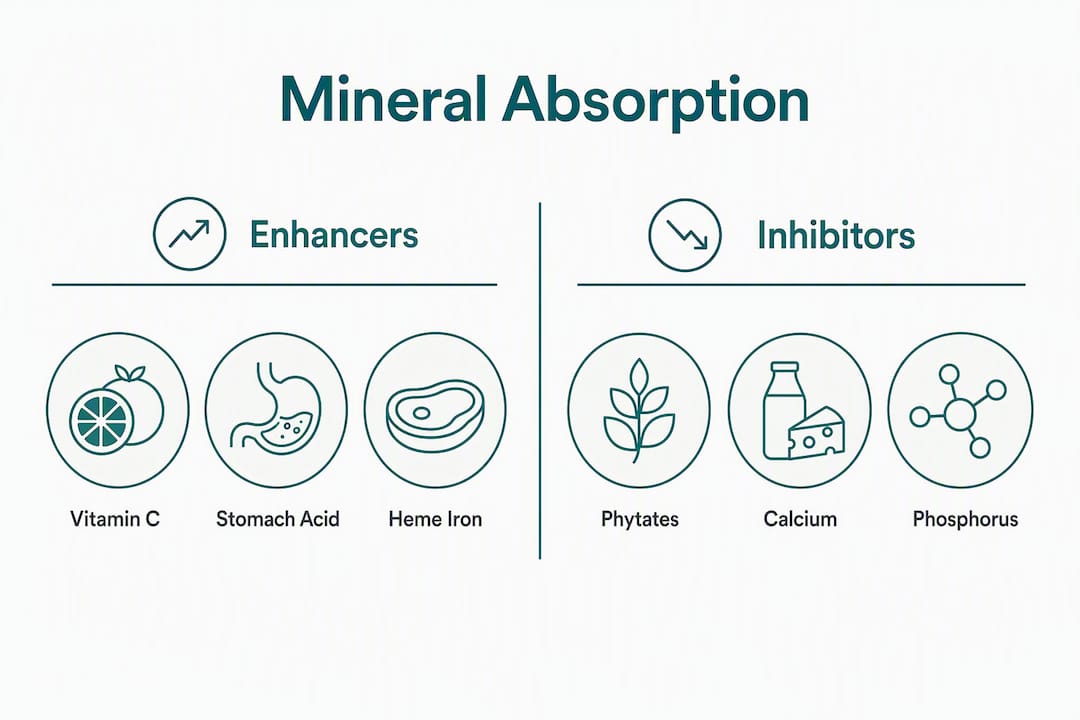
Phosphorus intake can reduce calcium bioavailability, and very high phosphorus diets, common in Central Europe due to processed food consumption, may affect bone mineral balance over time. Phytates in wholegrains and legumes bind iron and zinc, reducing their absorption. Fermenting, soaking, or sprouting these foods substantially lowers phytate content and improves mineral availability.
The chemical form of a mineral also matters for supplements. Heme iron (from animal sources) is absorbed at roughly two to three times the rate of non-heme iron (from plants or supplements). Among supplement forms, iron bisglycinate and ferrous sulphate are better absorbed than ferric oxide. Magnesium citrate and glycinate are more bioavailable than magnesium oxide. Calcium citrate is absorbed effectively without food, whereas calcium carbonate requires stomach acid and is best taken with a meal.
Pro Tip: Take iron supplements at least two hours apart from calcium supplements or dairy-rich meals. Calcium and iron compete for the same intestinal transport pathway, and taking them together can reduce iron absorption by a meaningful amount.
Recommended intakes, deficiency signs, and when to get tested
EFSA’s DRV framework sets PRIs as the intake level that meets the needs of almost all healthy individuals in a population, and ULs as the maximum daily intake unlikely to cause harm over a lifetime. Both figures account for all sources combined: food, fortified products, and supplements. Exceeding the UL does not guarantee harm, but it increases risk, particularly for minerals that accumulate in tissues.
Common deficiency signs to recognise:
- Iron deficiency: persistent fatigue, pallor, breathlessness on exertion, poor concentration, brittle nails, and in children, impaired cognitive development.
- Iodine deficiency: thyroid enlargement (goitre), fatigue, weight gain, cold intolerance, and in pregnancy, risk of foetal developmental delay.
- Magnesium deficiency: muscle cramps, sleep disturbance, irritability, and in severe cases, cardiac arrhythmia.
- Calcium deficiency: muscle spasms, dental problems, and over time, reduced bone density and increased fracture risk.
- Zinc deficiency: slow wound healing, frequent infections, hair loss, and loss of taste or smell.
- Selenium deficiency: muscle weakness, fatigue, and impaired thyroid function.
When to ask your clinician for tests:
- Serum ferritin and full blood count for iron status. Serum ferritin is the most sensitive early marker of iron depletion, though it can be falsely elevated during inflammation.
- Serum zinc for zinc status, though this test has limitations as zinc is tightly regulated and serum levels may not reflect tissue stores.
- 25-OH vitamin D is the standard test for vitamin D status, which directly affects calcium absorption and bone health.
- Urinary iodine concentration is the standard population-level measure of iodine status; a single urine sample gives a snapshot rather than a definitive individual assessment.
- Serum selenium is available in some Central European clinical settings and is worth requesting if you follow a plant-based diet or live in a low-selenium region.
Symptoms alone are not sufficient grounds for self-supplementing. A single blood test result also needs clinical context: serum zinc, for example, is not a reliable standalone indicator of whole-body zinc status. Bring a symptom log and a diet history to your appointment. If you follow a vegan or vegetarian diet, are pregnant, are over 60, or take medications that affect mineral absorption (such as proton pump inhibitors or diuretics), raise this proactively with your clinician.
Practical food strategies to meet your mineral needs
A varied diet built around whole foods covers most mineral requirements for healthy adults. The Harvard Health review makes the point clearly: vegetables, legumes, wholegrains, lean proteins, and dairy collectively supply the mineral matrix the body needs. Ultra-processed foods, by contrast, tend to be high in sodium and low in most other minerals, displacing nutrient-dense options from the diet.
Central European diets have particular strengths and gaps. Dairy consumption is generally high, supporting calcium and iodine intake. Rye bread, buckwheat, and barley, staples across Central Europe, provide magnesium, manganese, and some iron. Legumes such as lentils, chickpeas, and kidney beans are affordable and mineral-dense, offering iron, zinc, magnesium, and potassium in a single serving.
Practical food swaps and combinations:
- Replace white bread with rye or wholegrain bread to increase magnesium, zinc, and manganese.
- Add a small portion of pumpkin seeds or sunflower seeds to yoghurt or salads for magnesium and zinc.
- Pair lentil soup with a squeeze of lemon juice or a side of red pepper to enhance non-haem iron absorption.
- Use iodised salt in cooking rather than non-iodised sea salt or rock salt, which contain negligible iodine.
- Include oily fish (herring, mackerel, sardines) two to three times per week for iodine, selenium, and phosphorus.
- Eat a banana, a portion of potatoes, or a handful of dried apricots daily to maintain potassium intake.
A simple one-day template covering multiple minerals: porridge with milk and pumpkin seeds (calcium, magnesium, zinc) at breakfast; lentil soup with rye bread and red pepper (iron, zinc, magnesium, vitamin C) at lunch; grilled mackerel with boiled potatoes and steamed broccoli (iodine, selenium, potassium, calcium) at dinner; a small pot of plain yoghurt as a snack (calcium, iodine, phosphorus).
One specific concern in Central Europe: iodised salt use has declined in some countries as processed food consumption has risen, and many processed foods use non-iodised salt. If your diet is low in seafood and dairy, iodine intake may be insufficient. This is particularly relevant during pregnancy, when iodine requirements increase.
When are mineral supplements appropriate, and how do you choose safely?
Supplements are most appropriate when a documented deficiency exists, when dietary intake cannot meet elevated needs (pregnancy, older age, restrictive diets), or when a medical condition impairs absorption. They are not a substitute for dietary variety, and exceeding ULs through combined food and supplement intake carries genuine risk for several minerals, including iron, calcium, and selenium.
Rules for safe supplementation:
- Test first where possible. A confirmed shortfall justifies supplementation; a suspected one warrants dietary adjustment first.
- Match the dose to the gap. Supplementing at the PRI level is generally safe; supplementing at multiples of the PRI without clinical guidance is not.
- Choose bioavailable forms. Magnesium citrate or glycinate over oxide; iron bisglycinate or ferrous sulphate over ferric oxide; calcium citrate if you have low stomach acid.
- Check for overlaps. Multivitamin-mineral products, fortified foods, and individual supplements can combine to push intake above the UL for a given mineral.
- Watch for drug interactions. Proton pump inhibitors reduce magnesium and calcium absorption. Diuretics increase potassium and magnesium losses. Thyroid medication absorption is affected by calcium and iron supplements taken at the same time.
Checklist for evaluating a supplement product:
- Third-party testing certification (e.g. NSF International, Informed Sport, or equivalent European certification)
- Clear labelling of elemental dose, not just compound weight
- Single or targeted formulation rather than a broad-spectrum product with marginal doses of many minerals
- No proprietary blends that obscure individual ingredient amounts
- Transparent sourcing and manufacturing information
Effective supplementation targets specific deficiencies and accounts for nutrient interactions rather than delivering large doses of isolated minerals. A high-dose zinc supplement, for example, can deplete copper over time because the two minerals compete for intestinal absorption. Single-nutrient thinking often misses these interdependencies.
Pro Tip: If you take an iron supplement, do so on an empty stomach with a glass of orange juice or another vitamin C source. Avoid taking it within two hours of a calcium supplement, antacid, or cup of tea.
Minerals and healthy ageing: what current research shows
Age-related changes in gut microbiome composition reduce the efficiency of mineral absorption, particularly for calcium and magnesium. This means that older adults may need higher dietary intakes or targeted supplementation to maintain the same tissue levels as younger adults, even when their diet appears adequate on paper. Bone mineral density declines progressively after the mid-thirties, and the rate of loss accelerates after the menopause in women. Monitoring bone health through DEXA scanning and maintaining adequate calcium, vitamin D, and magnesium intake are practical priorities for adults over 50.
Immune function also depends on mineral status in ways that become more pronounced with age. Zinc and selenium deficiencies are associated with impaired vaccine response and increased susceptibility to respiratory infections, both of which are clinically relevant concerns for older adults. The MDPI special issue on mineral nutrition and human health highlights that tailored approaches, rather than generic supplementation, are most effective for this group.
Research note: Age-related gut microbiome shifts reduce mineral absorption efficiency, making bioavailability and supplement form selection increasingly important for adults over 60. Choosing highly bioavailable mineral forms and spacing supplements to minimise competitive inhibition can make a meaningful difference to actual tissue levels.
Vivetus publishes evidence-based guidance on minerals for healthy ageing and mineral support after 40, covering practical supplementation principles grounded in current research. The editorial approach prioritises EFSA DRV and UL frameworks alongside peer-reviewed evidence, with a consistent emphasis on clinician consultation before starting targeted supplementation.
Practical ageing-focused priorities:
- Monitor bone density and vitamin D status from age 50 onwards.
- Check serum ferritin and full blood count if fatigue is persistent; iron-deficiency anaemia is common in older women and often overlooked.
- Prioritise bioavailable supplement forms (magnesium citrate, calcium citrate) if digestive function has declined.
- Avoid high-dose single-mineral supplements without clinical guidance, particularly iron, calcium, and selenium, which carry the greatest toxicity risk at excess intakes.
Key takeaways
Minerals support bone structure, immune defence, neuromuscular function, and oxygen transport, and both deficiency and excess carry health consequences that a food-first approach, targeted testing, and evidence-based supplementation can prevent.
| Point | Details |
|---|---|
| Food first, always | A varied diet including dairy, legumes, wholegrains, oily fish, and nuts covers most mineral needs for healthy adults. |
| Iron and iodine are priority gaps | These are the most common mineral shortfalls in Central Europe; use iodised salt and pair plant iron with vitamin C. |
| Test before supplementing | Serum ferritin, full blood count, 25-OH vitamin D, and urinary iodine are the most clinically useful starting tests. |
| Respect EFSA upper intake levels | Combined intake from food, fortified products, and supplements can exceed safe thresholds; check ULs before stacking. |
| Vivetus Energy & Vitality bundel | A tested, evidence-based option for adults seeking broad mineral and nutrient coverage, particularly after 40. |
A note on editorial approach
Minerals are a topic where the gap between public understanding and clinical evidence is wider than most people realise. The advice here draws on EFSA’s DRV and UL frameworks, peer-reviewed reviews published in PMC and MDPI, and public health guidance from MedlinePlus and the FAO/WHO. Where the evidence is clear, the article states it directly. Where it is contested or context-dependent, that is noted.
This article is general information, not personalised medical advice. Mineral requirements vary by age, sex, health status, and medication use. For your own situation, confirm current guidance with a qualified clinician or registered dietitian.
Vivetus Energy & Vitality bundel: targeted support for active adults
For adults who have confirmed mineral shortfalls or who want broad nutritional coverage during a period of higher demand, such as after 40, during recovery, or when dietary variety is limited, Vivetus offers the Energy & Vitality bundel as a focused option.
The bundel is formulated for adults prioritising healthy ageing and vitality, with third-party tested ingredients and transparent dosing. It is not a replacement for a varied diet or clinical care, but for those who have spoken with a clinician and identified a need for targeted supplementation, it provides a convenient, evidence-aligned starting point. Free shipping applies to orders over €50 across Vivetus’s international delivery network. View the product page to check ingredients, dosing, and suitability for your needs, and consult your clinician before starting if you are on medication or managing a health condition.
Useful sources and further reading
- EFSA Dietary Reference Values: The primary European source for PRIs, AIs, and ULs across all minerals and vitamins. Use this to check recommended intakes and safe upper levels for specific minerals.
- EFSA DRV Summary Report: A consolidated reference table covering DRVs for 13 minerals across age groups and sexes. Useful for practitioners and informed readers.
- EFSA Guidance on Tolerable Upper Intake Levels (2024): The updated UL framework explaining how EFSA assesses risk from excess mineral intake, including from supplements and fortified foods.
- MedlinePlus: Minerals: A clear, accessible public health summary of minerals’ roles and common deficiency conditions. Good starting point for general readers.
- FAO/WHO: Vitamin and mineral requirements in human nutrition: The foundational international reference for recommended nutrient intakes, covering the historical basis for DRVs and context-specific recommendations.
- MDPI review: Minerals, deficiency and excess risks: A peer-reviewed review covering deficiency consequences, toxicity risks, and nutrient interactions for major and trace minerals.
- MDPI special issue: Mineral nutrition and human health: Recent research on ageing, gut microbiome changes, and their effects on mineral absorption and bone and immune health.
- PMC review: Minerals and immune function: A peer-reviewed review of how zinc, selenium, and iron support innate and adaptive immunity, with clinical implications for deficiency and supplementation.