

Clinically backed supplements: what the evidence actually shows
The supplements widely regarded to have human clinical evidence include vitamin D3, omega-3 fatty acids (EPA/DHA), creatine monohydrate, vitamin B12 (when deficient), iron (when deficient), and folic acid (around conception), based on published human studies with varying degrees of support. That distinction matters because human RCT evidence is categorically different from animal studies or in-vitro data.
- Vitamin D3: bone health, immune function, muscle function in people with low status
- Omega-3 (EPA/DHA): triglyceride reduction, cardiovascular support in higher-risk groups
- Creatine monohydrate: strength, muscle mass, and cognitive support in older adults
- Iron: only when a deficiency is confirmed by blood test
- Vitamin B12: only when deficient, particularly in older adults and those on plant-based diets
- Folic acid: strongly recommended before and during early pregnancy
- Magnesium: sleep quality, muscle function, and migraine frequency in specific populations
The single most useful question to ask about any supplement is: “Was this dose tested in a human RCT, in people like me, and did it produce a clinically meaningful result?” If the answer is not clearly yes, the evidence base is thinner than the marketing suggests.
One short caveat: dose and form matter as much as the substance itself, and several of these carry real interaction risks with common medications. Check with a pharmacist or GP before starting any supplement if you take prescription drugs or have a chronic condition.
Key takeaways
The supplements with the strongest human RCT evidence are vitamin D3, omega-3 (EPA/DHA), creatine monohydrate, folic acid, and targeted iron or B12 when a deficiency is confirmed.
| Point | Details |
|---|---|
| Prioritise human RCT evidence | Only RCTs and meta-analyses in humans confirm a causal effect; animal data supports plausibility only. |
| Match dose to the trial | A product with half the studied dose cannot claim the same clinical outcome; check amount per serving against the cited study. |
| Verify with a COA | A batch certificate of analysis from an independent laboratory confirms potency and purity; request one before purchasing. |
| Consult a clinician for interactions | Iron, fat-soluble vitamins, and herbal supplements carry real interaction risks with common prescription drugs. |
| Vivetus for verified longevity supplements | Vivetus publishes COAs and offers evidence-oriented bundles for healthy ageing, with free shipping on orders over €50. |
Table of Contents
- What does ‘klinisch onderbouwd’ actually mean for shoppers?
- How health claims are vetted and what to trust on labels
- Which supplements have the strongest human evidence?
- Safety, interactions, and when to consult a clinician
- How to verify clinical claims and product quality when shopping
- A 60-second checklist: is this supplement clinically backed?
- Common misunderstandings about supplement research
- An evidence-focused view on what ‘klinisch onderbouwd’ really requires
- Vivetus: clinically oriented supplements with verifiable quality
- Sources
What does ‘klinisch onderbouwd’ actually mean for shoppers?
The phrase klinisch onderbouwd (clinically supported) refers to evidence from human studies, ideally randomised controlled trials (RCTs) or meta-analyses of multiple RCTs, that demonstrate a causal effect in the relevant population at a specific dose. It does not mean “tested in a lab” or “studied in animals.”
Human RCTs and systematic reviews are required for most health-claim substantiation; animal data can support biological plausibility but cannot substitute for human evidence. This hierarchy is the foundation of how EFSA evaluates claims, and it is the same standard you should apply when reading a product page.
The evidence hierarchy, from strongest to weakest:
- Systematic reviews and meta-analyses of RCTs — pool data from multiple trials; the most reliable signal
- Individual RCTs — a single well-designed trial; strong but replicable only if repeated
- Well-conducted observational studies (cohort, case-control) — show association, not causation
- Animal and in-vitro studies — biological plausibility only; not proof of human effect
- Expert opinion and anecdote — lowest tier; useful for generating hypotheses, not confirming them
When reading a study summary, look for these features before trusting the result:
- Sample size: at least several dozen participants for a preliminary signal; hundreds or more for a reliable conclusion
- Control or placebo group: without one, you cannot separate the supplement’s effect from the placebo effect or natural variation
- Blinding: double-blind trials (neither participant nor researcher knows who received the active substance) reduce bias substantially
- Clinically meaningful endpoints: a statistically significant change in a biomarker is not the same as a meaningful health outcome
- Duration: short trials (two to four weeks) may not reflect long-term effects
For a deeper look at how study design affects supplement choices, the Vivetus guide on clinical research in supplements explains RCT design in plain terms.
How health claims are vetted and what to trust on labels
EFSA evaluates health claims and an authorised claim means EFSA found sufficient human evidence to support a causal relationship between a nutrient and a health benefit. That is a meaningful standard. Most claims submitted to EFSA are rejected or receive a negative opinion because the human evidence is insufficient.
For shoppers, the practical implication is straightforward: an authorised claim on a label carries more weight than marketing language such as “clinically proven” or “scientifically formulated,” which have no standardised definition and no regulatory threshold.
Three quick checkpoints when you see a health claim:
- Check the EFSA register: the EU Register on Nutrition and Health Claims lists every authorised and rejected claim by substance. If a claim is not on the authorised list, it has not passed EFSA review.
- Check the stated dose and conditions of use: an authorised claim is tied to a specific dose and sometimes a specific population. A product with half the required dose cannot legitimately carry the claim.
- Check for required label statements: authorised claims often require accompanying statements (for example, vitamin D claims require a note about adequate sun exposure or dietary intake). Missing statements are a warning sign.
The NVWA Handboek voedings- en gezondheidsclaims documents how enforcement focuses on online marketing and misleading claims. Webshops that use vague or unauthorised clinical language are a known enforcement target, which means the risk to the shopper is real: you may be paying for a claim that has no regulatory backing.
Which supplements have the strongest human evidence?
The table below covers substances with meaningful human trial data. Evidence levels reflect the breadth and quality of the RCT and meta-analysis literature, not marketing claims.
Vitamin D3 is the supplement most consistently recommended for Central European adults. Northern and central latitudes produce insufficient UVB for adequate synthesis for much of the year, and Voedingscentrum guidance identifies older adults, people with darker skin, and those who cover up outdoors as groups who benefit from targeted supplementation. EFSA’s review of vitamin D evidence supports bone health outcomes; evidence for broad disease prevention is more mixed.
Omega-3 (EPA/DHA) has a well-established effect on triglycerides at doses of 3 g or more per day of combined EPA and DHA. Meta-analyses confirm cardiovascular benefits in higher-risk populations; the effect size in healthy adults with normal lipids is smaller. Fish oil quality varies considerably between products, so form and oxidation status matter.
Creatine monohydrate is one of the most studied sports nutrition compounds. Systematic reviews and meta-analyses confirm benefits for strength and muscle mass in people doing resistance training, and there is growing evidence for muscle preservation in older adults. The monohydrate form is the most studied; other forms offer no proven advantage.
Iron and vitamin B12 should be taken only after a confirmed deficiency. Clinical guidance is clear that unnecessary iron supplementation carries risks, including gastrointestinal side effects and, at high doses, oxidative stress. The same applies to B12: supplementation is highly effective when deficient, but routine use in people with adequate levels adds no documented benefit.
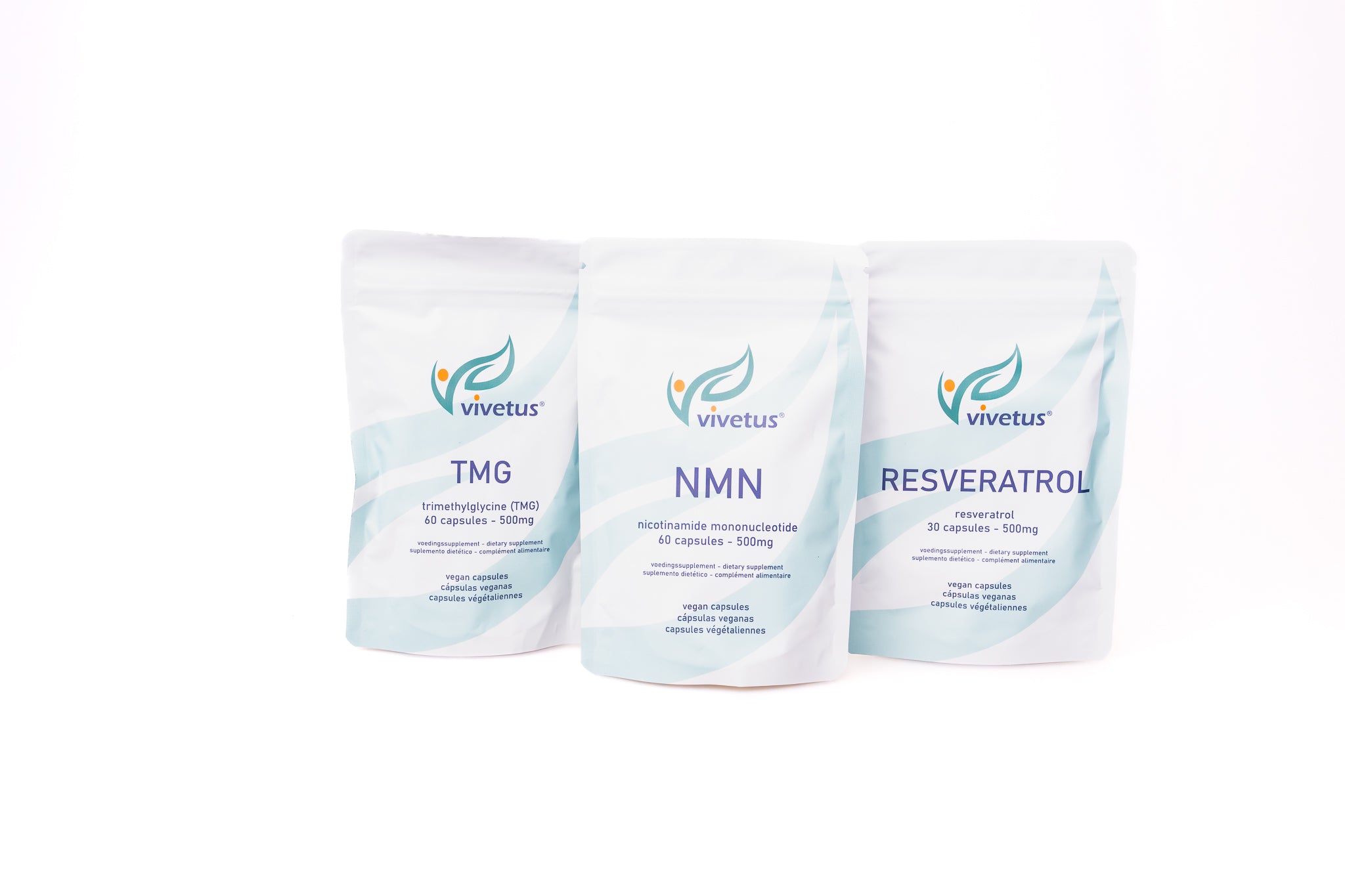
NMN and polyphenols such as resveratrol, fisetin, quercetin, and pterostilbene are in a different category. Human trial data is accumulating but remains early-stage. These compounds are genuinely interesting from a longevity-research perspective, and several small human trials show promising signals, but the evidence base does not yet match that of vitamin D or creatine. For adults specifically interested in healthy ageing, the Vivetus guide on supplement evidence after 50 covers what the current human data shows and where the gaps remain.
Safety, interactions, and when to consult a clinician
Most supplements at standard doses are well tolerated by healthy adults. The risk profile changes significantly with high doses, fat-soluble vitamins, iron, and any supplement taken alongside prescription medication.
Red flags on product labels and marketing:
- Doses far above established upper limits (e.g. vitamin A above 3,000 µg RAE/day for adults)
- “Proprietary blend” with no individual ingredient quantities listed
- Claims that the product treats, cures, or prevents a named disease
- No lot number, manufacturer address, or contact details
- No certificate of analysis (COA) or third-party testing reference
Common interactions worth knowing:
- Iron taken within two hours of levothyroxine (thyroid medication) reduces absorption of both
- Vitamin K (particularly K2) can reduce the effectiveness of warfarin; anyone on anticoagulants needs medical supervision before supplementing
- High-dose vitamin E may increase bleeding risk, particularly before surgery
- St John’s Wort (a herbal supplement) interacts with a wide range of prescription drugs including antidepressants, contraceptives, and antiretrovirals
- Calcium in high doses can interfere with absorption of zinc, magnesium, and iron when taken simultaneously
When to speak to a doctor or pharmacist before starting a supplement:
- You are pregnant or breastfeeding
- You have a chronic condition (kidney disease, liver disease, autoimmune conditions)
- You take any prescription medication
- You are planning surgery within the next four weeks
- You are giving supplements to a child
Monitoring your response after starting a supplement is as important as choosing the right one. The Vivetus practical guide on monitoring supplement effectiveness sets out a clear framework for tracking whether a supplement is producing the expected result.
How to verify clinical claims and product quality when shopping
Use a short checklist when viewing a product page or label. The goal is to confirm in under two minutes whether the clinical claim is real and the product quality is verifiable.
Claim verification checklist:
- Does the product cite a specific publication (PubMed ID, DOI, or journal name)? A press release or brand website does not count.
- Does the cited study use the same dose, form, and population as the product you are buying?
- Is the study an RCT or meta-analysis, or is it a cell study or animal trial?
- Is the claim authorised in the EU Register on Nutrition and Health Claims, or is it a marketing phrase?
- Does the product carry a third-party test certificate or COA for the specific batch?
Label fields to read and what they mean:
- Amount per serving: the dose per serving must match the dose used in the cited trial
- Active form: for example, vitamin D3 (cholecalciferol) is better absorbed than D2 (ergocalciferol); methylcobalamin vs cyanocobalamin for B12
- Lot number: allows you to request or verify the batch COA
- Storage instructions: fat-soluble vitamins and fish oils degrade without correct storage
- Manufacturer name and contact: a legitimate supplier lists a physical address and contact route
Pro Tip: When a product page cites a “clinical study,” search the study title or authors on PubMed or Google Scholar. If you cannot find the full citation, the study may be unpublished, industry-only, or misrepresented. A real RCT will have a registration number (ClinicalTrials.gov) and a peer-reviewed publication.
The Vivetus supplement labelling guide covers the most common label misreadings and what each field actually tells you about product quality.
A 60-second checklist: is this supplement clinically backed?
Run through these five points before purchasing any supplement claiming clinical support.
1. Evidence type: is there an RCT or meta-analysis in humans? Look for a peer-reviewed publication, not a brand white paper. Animal studies and in-vitro data are not human evidence. A fail here means the clinical claim is unsubstantiated regardless of how the marketing reads.
2. Does the dose match the trial? An effective dose in a study is not transferable to a product with half that amount. Check the amount per serving on the label against the dose reported in the cited study. A product with 200 mg of a compound studied at 500 mg cannot claim the same effect.
3. Is there a COA or third-party test result? A certificate of analysis from an independent laboratory confirms that the product contains what the label states, at the stated potency, without contaminants. Reputable suppliers make batch COAs available on request or on their website.
4. Is the manufacturer transparent? A physical address, a contact email or phone number, and clear country of manufacture are baseline requirements. Anonymous or offshore-only suppliers with no traceable address are a quality risk.
5. Is the marketing language realistic? Phrases such as “reverses ageing,” “guaranteed results,” or “clinically proven to eliminate” are signals of overstated claims. Credible brands use bounded language: “supports,” “contributes to,” “shown in clinical trials to reduce.”
What a good label looks like vs a dubious one:
- Good: “Vitamin D3 25 µg (1,000 IU) per capsule. Batch COA available. Manufactured in an ISO-certified facility. Supports normal bone function (authorised EU health claim).”
- Dubious: “Proprietary Wellness Blend 500 mg. Clinically proven formula. Reverses cellular ageing. No individual ingredient quantities listed.”
Common misunderstandings about supplement research
Many supplement headlines are built on small, short, or industry-funded studies. A single RCT with 30 participants over four weeks is a starting point for research, not a general proof of efficacy.
Common myths worth correcting:
- “Natural means safe”: dose determines toxicity. Vitamin A, iron, and selenium are all natural and all carry real risks at high doses.
- “If it works in mice, it works in people”: many compounds with strong animal data fail in human trials. Resveratrol is a well-documented example: dramatic effects in rodent models, modest and inconsistent results in human RCTs to date.
- “A proprietary blend means a superior formula”: it usually means individual ingredient quantities are hidden. You cannot verify whether each ingredient is at a dose that matches any clinical evidence.
- “More is better”: for most micronutrients, there is an optimal range. Above it, benefit plateaus and risk increases. This is particularly relevant for fat-soluble vitamins (A, D, E, K) and minerals such as selenium and zinc.
- “A study funded by the manufacturer is independent evidence”: industry-funded studies are not automatically invalid, but they are more likely to report positive results. Independent replication by a separate research group is the stronger signal.
Consumer evidence reviews consistently place multivitamins and most herbal products in the “limited or overhyped” category for healthy adults, while a short list of high-evidence supplements (vitamin D, omega-3, creatine, targeted iron and B12) holds up across independent reviews. The gap between what is marketed and what is supported by human trials is wide for most products on the market.
An evidence-focused view on what ‘klinisch onderbouwd’ really requires
The standard I apply when assessing any supplement claim is simple: human trials, at the dose in the product, in a population that resembles the buyer. Everything else is context, not proof.
In practice, that means checking PubMed for the cited study, verifying the dose on the label against the trial protocol, and looking for a batch COA before recommending a product. The EFSA register is a useful shortcut for common vitamins and minerals: if the claim is authorised, the evidence threshold has been met. For newer compounds such as NMN, fisetin, and pterostilbene, the honest position is that human data is promising but early. That does not make these compounds worthless; it means the appropriate framing is “experimental” rather than “proven.”
Vivetus publishes product COAs and positions its supplement range around the kind of transparency that makes this kind of verification possible. For shoppers who want to check the evidence behind specific products, that transparency is the practical starting point.
Vivetus: clinically oriented supplements with verifiable quality
Choosing a supplier that makes verification straightforward saves time and reduces the risk of buying a product that does not match its claims. Vivetus offers a range of vegan, clinically oriented supplements for healthy ageing, including NMN, resveratrol, fisetin, quercetin, pterostilbene, apigenin, TMG, and berberine, all available with batch COAs and third-party purity testing.

The trust signals that matter most are present: clear dosing per serving, published COAs, transparent ingredient sourcing, and no proprietary blends that hide individual quantities. For adults over 40 who want supplements aligned with the evidence standards described in this article, the Energy and Vitality bundle is a practical starting point. Free shipping applies to orders over €50, and both one-time and subscription purchase options are available. Product COAs are accessible on request, and customer support is reachable directly through the Vivetus website.
Sources
The following primary sources allow you to verify claims, read study abstracts, and check authorised health claims directly.
- EFSA
- General scientific guidance for health claim applications (PMC article)
- Handboek voedings- en gezondheidsclaims (NVWA)
- Voedingscentrum – Voedingssupplementen
This article is general information, not a substitute for advice from a qualified doctor. Consult a qualified healthcare professional about your own circumstances before acting on anything here.