

Balanced diet guide: eat well, live longer
TL;DR:
- A balanced diet provides all essential nutrients in proper proportions to support health and longevity.
- Meal planning and regular eating habits help maintain nutritional balance while reducing reliance on processed foods.
A balanced diet is defined as a pattern of eating that supplies all essential nutrients, including carbohydrates, proteins, fats, vitamins, and minerals, in proportions that support health, energy, and longevity. European nutritional guidelines recommend 5 daily portions of varied fruits and vegetables as a foundation, alongside whole grains, lean proteins, and healthy fats. This balanced diet guide covers the food groups you need, how to plan meals practically, and how to overcome the barriers that derail most people before they see results.
What does a balanced diet actually include?
A balanced diet is built from five core food groups, each contributing nutrients the body cannot produce on its own. Getting the proportions right matters as much as the choices themselves.

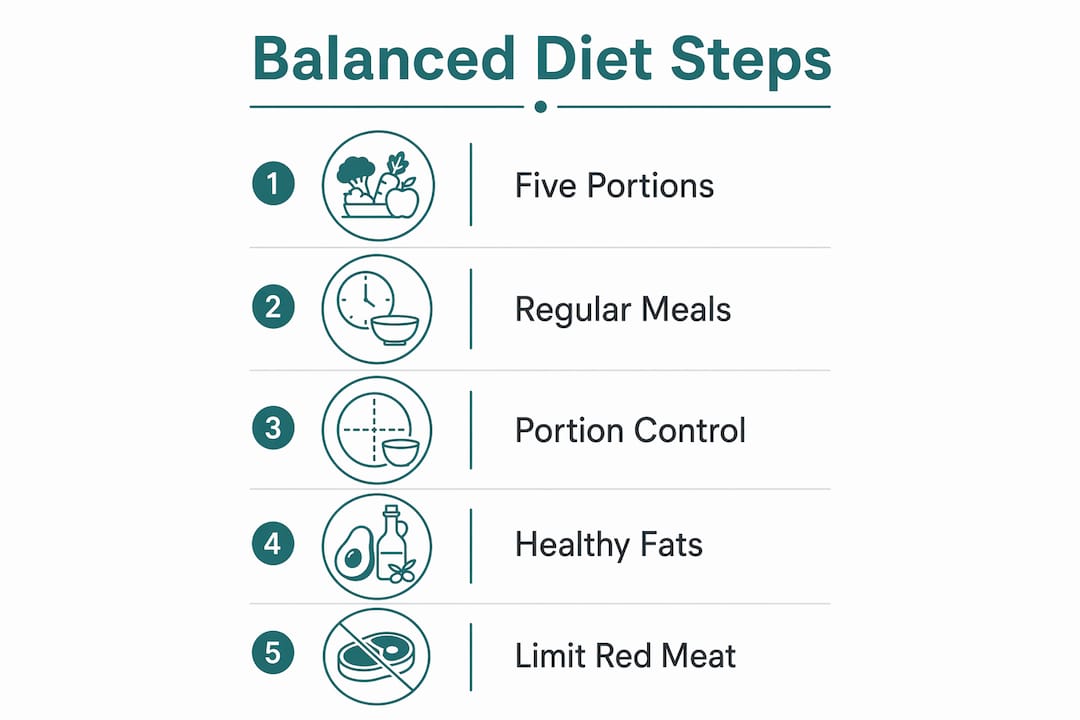
Fruits and vegetables form the largest share of a healthy eating plan. Aim for at least five portions daily, favouring regional and seasonal produce where possible. Variety is the operative word: dark leafy greens deliver iron and folate, while orange and red vegetables supply beta-carotene and vitamin C.
Whole grains are the preferred carbohydrate source. Oats, brown rice, wholemeal bread, and rye provide fibre, B vitamins, and sustained energy. Refined grains, by contrast, spike blood sugar and offer little nutritional return.
Protein sources divide into two categories worth balancing across the week:
- Plant-based: lentils, chickpeas, black beans, tofu, tempeh, nuts, and seeds
- Lean animal: poultry, eggs, oily fish such as salmon and mackerel, and low-fat dairy
European guidelines recommend limiting red meat to 300–500 g per week. That ceiling exists because processed and red meats are linked to elevated cardiovascular risk when consumed in excess.
Healthy fats come from unsaturated sources: olive oil, avocado, walnuts, and flaxseeds. These support brain function and reduce inflammation. Saturated fats from butter and fatty cuts of meat should be kept to a minimum.
Dairy or fortified alternatives round out the picture, supplying calcium and vitamin D. Full-fat versions are not automatically harmful, but portion awareness applies here as elsewhere.
| Food group | Recommended daily intake | Key nutrients supplied |
|---|---|---|
| Fruits and vegetables | At least 5 portions | Vitamins, minerals, fibre, antioxidants |
| Whole grains | 3–6 servings | Complex carbohydrates, B vitamins, fibre |
| Protein (plant and lean animal) | 2–3 servings | Amino acids, iron, zinc, omega-3 |
| Healthy fats | Small amounts daily | Unsaturated fatty acids, fat-soluble vitamins |
| Dairy or alternatives | 2–3 servings | Calcium, vitamin D, protein |
How do you plan meals for balanced nutrition every day?
Meal planning is the single most reliable method for maintaining nutritional balance across a busy week. Without a plan, most people default to convenience foods that are calorie-dense but nutrient-poor.
Eat at regular intervals
Consuming meals every 3–4 hours optimises metabolism and sustains energy throughout the day. Five meals, structured as three main meals and two smaller snacks, prevents the energy dips that trigger poor food choices. Skipping breakfast, for instance, consistently leads to higher calorie intake later in the day.
Use the plate method
The plate method is a visual tool that removes the need to count calories at every meal. Fill half your plate with vegetables and fruit, one quarter with whole grains, and one quarter with a protein source. Add a small portion of healthy fat, such as a drizzle of olive oil or a handful of nuts, to complete the macronutrient balance.
Read labels and control portions
Portion distortion is one of the most common reasons a healthy eating plan fails. A serving of pasta is typically 75–80 g dry weight, yet most people cook double that amount. Reading food labels reveals not just calories but sodium, added sugars, and saturated fat content. Small, practical changes in food preparation and label literacy drive sustainable improvements far more effectively than strict calorie restriction.
A simple weekly meal prep framework
- Choose two or three whole grain bases for the week (e.g., brown rice, quinoa, oats).
- Batch-cook one or two protein sources on Sunday (e.g., roasted chicken, a pot of lentils).
- Wash and chop vegetables in advance so they are ready to use.
- Prepare two snack options, such as Greek yoghurt with berries or hummus with carrot sticks.
- Plan one flexible meal per day to accommodate social eating without guilt.
Pro Tip: Introduce one new vegetable or whole grain per week rather than overhauling your entire diet at once. The 3-step method of incremental dietary change, focusing on cooking techniques, label reading, and gradual food swaps, reduces the sense of restriction and builds habits that last.
What are the most common barriers to a balanced diet?
The biggest obstacle to balanced nutrition is not access to healthy food. Nutrition knowledge gaps hinder balanced diets more than food availability does. That finding from the Swiss Nutrition Strategy 2025–2032 reframes the problem: education, not willpower, is the missing ingredient for most people.
Common barriers include:
- Misinformation: Social media promotes fad diets that eliminate entire food groups, creating unnecessary fear around carbohydrates or fats.
- Social pressure: Eating out, celebrations, and peer influence make it difficult to maintain dietary consistency without feeling excluded.
- Monotony: Eating the same meals repeatedly leads to boredom and eventual abandonment of a healthy eating plan.
- Cravings: Ultra-processed foods are engineered to override satiety signals, making moderation genuinely difficult without planning.
Overcoming monotony is straightforward with variety. Rotate protein sources weekly, experiment with spices and herbs from different culinary traditions, and treat seasonal produce as a natural menu-planning prompt.
Nutrient requirements are defined by the Estimated Average Requirement (EAR) for populations and the Recommended Dietary Allowance (RDA) for individuals. A Tolerable Upper Intake Level (UL) also exists, and exceeding the UL from all sources combined creates documented health risks. This matters when combining fortified foods with supplements, as it is easy to exceed safe thresholds without realising it.
Physical activity complements dietary balance rather than compensating for poor food choices. Experts recommend 30–45 minutes of daily activity alongside consistent meal timing. Movement improves insulin sensitivity, which directly affects how efficiently the body uses the carbohydrates and proteins you consume.
Does a balanced diet need to be sustainable too?
The modern definition of a balanced diet now incorporates environmental impact alongside personal health. Sustainable eating evaluates food choices against greenhouse gas emissions, land use, and water consumption, not just nutrient content. The two goals align more than they conflict.
Practical steps towards sustainable nutrition include:
- Prioritise regional and seasonal produce. Locally grown food typically requires less transport and cold-chain energy. Seasonal vegetables are also fresher and more nutrient-dense at point of purchase.
- Shift the protein balance towards plants. Legumes, lentils, and pulses produce a fraction of the greenhouse gas emissions of beef or lamb. Replacing two or three meat-based meals per week with plant-based alternatives makes a measurable difference.
- Reduce food waste. Planning meals in advance, using vegetable scraps for stock, and freezing surplus portions all reduce the environmental cost of your diet.
- Choose eco-friendly supplementation where relevant. When whole foods cannot meet specific nutrient needs, selecting supplements with responsible sourcing and minimal packaging extends the sustainability principle.
Sustainable nutrition does not require perfection. Austrian and Slovenian dietary experts both emphasise that small, consistent shifts in food sourcing and preparation accumulate into significant long-term impact, for both the individual and the environment.
Key takeaways
A balanced diet built on varied food groups, regular meal timing, and gradual, evidence-based changes is the most reliable path to long-term health and vitality.
| Point | Details |
|---|---|
| Five portions of fruit and veg daily | Variety and seasonal choices maximise nutrient density and support long-term health. |
| Limit red meat to 300–500 g per week | European guidelines recommend plant-based and lean proteins as primary sources. |
| Eat every 3–4 hours | Regular meal timing optimises metabolism and prevents energy dips that lead to poor choices. |
| Education beats willpower | Nutrition knowledge gaps are the primary barrier; improving food literacy drives lasting change. |
| Sustainability and health align | Choosing regional, seasonal, and plant-based foods benefits both personal health and the environment. |
Why I think gradual change beats every diet trend I’ve seen
Most people approach balanced eating as a project with a start date and an end date. That framing is the problem. After years of observing how people actually change their diets, the pattern is consistent: those who succeed make one or two small adjustments at a time, not wholesale overhauls.
The evidence supports this. Incremental dietary adjustments, such as modifying cooking methods and reading labels, promote sustainable habits far more effectively than elimination diets. The people who swap white rice for brown rice this month, and add a portion of lentils next month, are still eating well two years later. The people who cut out all carbohydrates in January rarely make it to March.
The other misconception worth addressing is that a balanced diet requires expensive or exotic ingredients. A balanced diet for elderly adults and younger people alike is built on affordable staples: oats, eggs, tinned legumes, frozen vegetables, and seasonal fruit. Cost is rarely the real barrier. Knowledge and habit are.
My honest advice: pick one meal per day to get right first. Make breakfast genuinely nutritious for four weeks. Then apply the same attention to lunch. That sequence works. Trying to fix everything at once rarely does.
— Jord
Vivetus and evidence-backed nutritional support
Choosing the right nutritional products to complement a balanced diet is not straightforward. The supplement market is crowded, and quality varies considerably.

Vivetus specialises in scientifically backed dietary supplements designed to support healthy ageing and overall vitality. The Vivetus blog covers practical topics including selecting nutritional products for healthy ageing and top evidence-backed picks for adults focused on long-term wellbeing. Free shipping on orders over €50 is available across Vivetus’s international customer base. For a full overview of available products, visit Vivetus.
FAQ
What is a balanced diet?
A balanced diet supplies all essential nutrients, including carbohydrates, proteins, fats, vitamins, and minerals, in proportions that support health and energy. European guidelines define it as including at least five daily portions of fruits and vegetables alongside whole grains, lean proteins, and healthy fats.
How many meals should you eat per day for balanced nutrition?
Dietary experts recommend five meals spaced every 3–4 hours, comprising three main meals and two snacks. This frequency optimises metabolism and sustains consistent energy levels throughout the day.
What is the difference between EAR and RDA in nutrition?
The Estimated Average Requirement (EAR) reflects the nutrient needs of half a given population, while the Recommended Dietary Allowance (RDA) covers the needs of most individuals. Both sit below the Tolerable Upper Intake Level (UL), which should not be exceeded from all sources combined.
How much red meat is safe to eat per week?
European nutritional guidelines recommend a maximum of 300–500 g of red meat per week. Exceeding this amount is associated with increased cardiovascular risk, and plant-based or lean animal proteins are encouraged as primary alternatives.
Does sustainable eating compromise nutritional quality?
Sustainable eating does not reduce nutritional quality when planned correctly. Prioritising regional, seasonal, and plant-based foods typically increases fibre and micronutrient intake while reducing the environmental impact of greenhouse gas emissions and land use.