

Probiotics for seniors: boost gut health and wellbeing
TL;DR:
- Gut health declines significantly after age 60, requiring specific probiotic strains to restore balance and support digestion, immunity, and muscle function. Evidence-based probiotics can improve bowel regularity, reduce inflammation, enhance nutrient absorption, and positively influence cognitive health in seniors. Selecting appropriate strains, maintaining consistent use, and combining probiotics with lifestyle factors optimize benefits for healthy aging.
Gut health changes significantly after the age of 60, yet most people assume any probiotic off a pharmacy shelf will do the job. The role of probiotics for seniors is more specific than that. Gut microbial diversity drops with age, immune defences weaken, and the strains that work well for a 35-year-old may do very little for someone at 70. This article covers what the research actually shows about probiotics and gut health in seniors, which strains matter, and how to use them to support digestion, immunity, muscle function, and brain health.
Table of Contents
- How probiotics support digestive health in older adults
- Probiotics and immunity: strengthening seniors’ defences
- Improving muscle strength and physical function with probiotics
- Probiotics and brain health: cognitive benefits for seniors
- Choosing and using probiotics safely for seniors
- Reevaluating probiotics for seniors: what most people miss
- How Vivetus supports your probiotic journey for healthy ageing
- Frequently asked questions
Key Takeaways
| Point | Details |
|---|---|
| Probiotics restore gut balance | They help replenish beneficial bacteria lost with age, improving digestion and bowel comfort. |
| Specific strains matter | Health benefits depend on probiotic species and dosages tailored for seniors’ needs. |
| Immune support benefits | Probiotics strengthen gut-linked immunity, reducing infections and inflammation in older adults. |
| Improve muscle and cognition | Certain probiotics help increase muscle strength and support brain function in seniors. |
| Safe gradual use advised | Start low and increase dosage slowly with medical advice to minimise side effects and optimise benefits. |
How probiotics support digestive health in older adults
The gut microbiome in older adults looks markedly different from that of younger people. Beneficial species such as Bifidobacterium decline, while potentially harmful bacteria increase. This shift affects digestion, nutrient absorption, and bowel regularity. Understanding the role of probiotics for seniors starts here, because restoring some of that balance is where the clearest benefits lie.
Specific strains have demonstrated real effects on common digestive complaints. Daily fermented milk with L. casei Shirota improved bowel function in older adults, reducing constipation and improving transit time. That matters, because constipation affects roughly 30 to 40 percent of older adults and is one of the most frequent reasons seniors seek medical attention for digestive issues.
The benefits of probiotics for elderly individuals extend to managing bloating and irritable bowel symptoms as well. Lactobacillus plantarum and Bifidobacterium infantis have both shown reductions in abdominal discomfort in clinical settings. These are not dramatic overnight changes; they are gradual improvements that compound over weeks of consistent use.
Key considerations for gut health support in seniors include:
- Strain specificity matters. Not every probiotic label delivers meaningful digestive support. Look for named strains such as Lactobacillus acidophilus NCFM or Bifidobacterium longum BB536.
- Prebiotic fibre amplifies results. Probiotics need fuel. Pairing them with fibre sources such as oats, chicory root, or psyllium husk supports colonisation in the gut.
- Bowel regularity responds first. Most seniors notice improved consistency and frequency within four to six weeks.
- IBS symptom relief is possible but variable. Some older adults see meaningful reductions in bloating; others do not. Individual baseline microbiome composition plays a large role.
Pro Tip: Take your probiotic in the morning with a small meal containing fibre. This gives the live cultures a protective food buffer and something to feed on as they establish in the gut.
Exploring broader nutritional supplements advantages can also help you understand how probiotics fit into a wider daily supplement routine for healthy ageing.
Probiotics and immunity: strengthening seniors’ defences
Gut health and immune function are not separate systems. They are deeply linked. Approximately 70% of the immune system is connected to the gut, and probiotics support immune defences in adults aged 65 and over, particularly in reducing the risk of antibiotic-related diarrhoea and respiratory infections.
Low-grade chronic inflammation, sometimes called “inflammageing,” is a known feature of ageing. It contributes to conditions ranging from cardiovascular disease to cognitive decline. Certain probiotic strains directly reduce the inflammatory markers associated with this process. Lactobacillus rhamnosus GG and Bifidobacterium lactis Bi-07, for instance, have both been shown to reduce pro-inflammatory cytokines in older adult populations.
“The impact of probiotics on senior health is not limited to digestion. Consistent use of evidence-based strains can meaningfully lower infection frequency and support the gut barrier, which acts as the body’s first line of defence against pathogens.”
The immune benefits of probiotic supplements are strain-specific and dose-dependent. A product with 1 billion CFU of Lactobacillus casei behaves differently from one with 50 billion CFU of a mixed, poorly studied blend. More is not always better; appropriate strain selection is what drives results.
Practical immune-related benefits for seniors include:
- Reduced frequency and duration of upper respiratory infections
- Lower rates of antibiotic-associated diarrhoea following treatment courses
- Improved gut barrier integrity, reducing the passage of harmful bacteria into the bloodstream
- Modest reductions in systemic inflammatory markers over 8 to 12 weeks
Reviewing supplement safety tips before starting any new probiotic product is a sound step, particularly for seniors managing multiple health conditions or taking regular medications.
Improving muscle strength and physical function with probiotics
Sarcopenia, the age-related loss of muscle mass and strength, affects an estimated 10 to 27 percent of adults over 65. It reduces independence, increases fall risk, and shortens the window of active, healthy living. Most people do not associate gut bacteria with muscle health, but the evidence is building steadily.
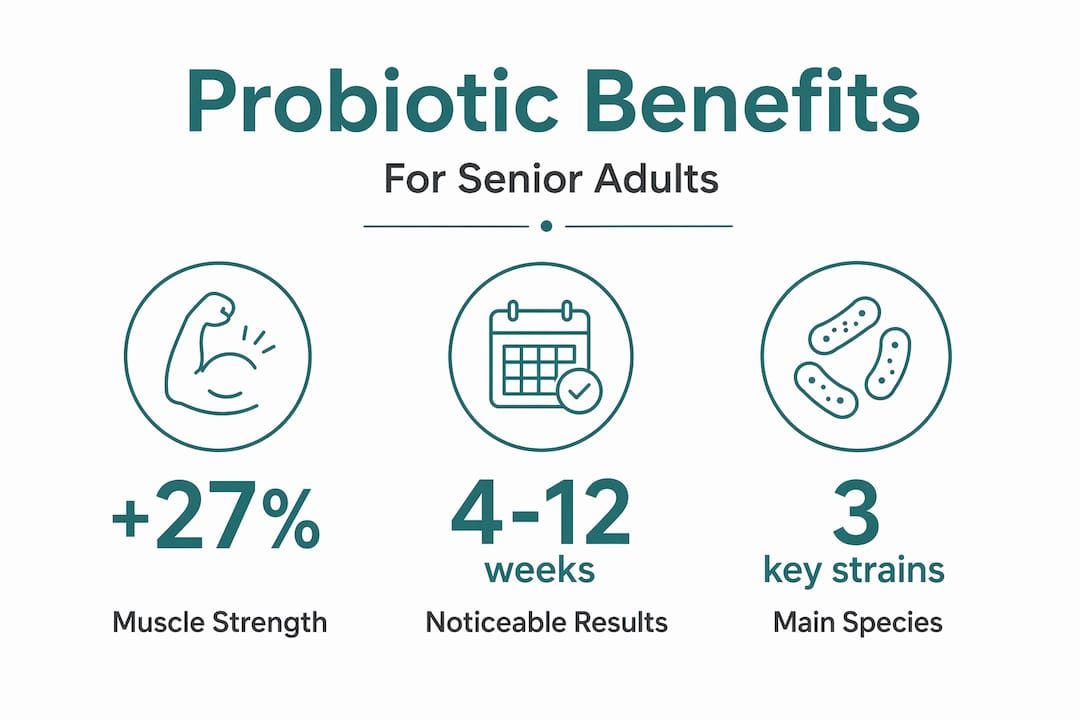
Probiotic supplementation with Bifidobacterium and Lactobacillus species in older adults with sarcopenia increased muscle strength with an effect size (SMD) of 0.32, and handgrip strength by an SMD of 0.91. These are clinically meaningful numbers, not trivial statistical artefacts.

The mechanism involves the gut’s role in protein absorption and inflammation. Probiotics improve nutrient extraction from food, which supports muscle protein synthesis. They also reduce the inflammatory environment that accelerates muscle breakdown. Synbiotic combinations, meaning probiotics paired with prebiotics, appear to enhance these effects further.
| Outcome measured | Effect observed | Strain examples |
|---|---|---|
| Overall muscle strength | SMD 0.32 improvement | Bifidobacterium longum, L. acidophilus |
| Handgrip strength | SMD 0.91 improvement | Multi-strain synbiotic blends |
| Physical function score | Modest, consistent gains | Lactobacillus rhamnosus GG |
| Lean muscle mass | Gradual increase over 12 weeks | Bifidobacterium lactis Bi-07 |
Pro Tip: Combine probiotic supplementation with adequate dietary protein, aiming for 1.2 to 1.6 grams per kilogram of body weight daily. The two work together; probiotics improve protein absorption, while protein gives the muscles the raw material they need.
If you are still uncertain about which products to use, guidance on choosing supplements for healthy aging can help you identify the right probiotic format and strain combination for your specific goals.
Probiotics and brain health: cognitive benefits for seniors
The gut and the brain communicate constantly through the vagus nerve, immune signalling, and neurotransmitter pathways. Gut microbes produce or influence serotonin, GABA, and short-chain fatty acids that reach the brain. This is the gut-brain axis, and it is why how probiotics help older adults extends well beyond the digestive tract.
In a clinical trial, 12-week multi-strain probiotic supplementation improved cognitive scores by 1.1 points on the Montreal Cognitive Assessment in Parkinson’s patients. That is a measurable, meaningful shift using a validated clinical tool.
The best probiotics for ageing that target cognitive support tend to include Lactobacillus helveticus Rosell-52 and Bifidobacterium longum Rosell-175, a combination studied specifically for its effects on mood and stress response. These strains influence cortisol levels and anxiety markers, which indirectly protect cognitive function over time.
Notable cognitive and mood-related benefits observed in research:
- Improved working memory and attention in adults over 60 following 12 weeks of consistent probiotic use
- Reduced depressive symptoms in older adults with mild cognitive impairment, via gut-produced neurotransmitter support
- Slower cognitive decline in Alzheimer’s patients given multi-strain synbiotic formulas over six months
- Better sleep quality, which indirectly supports brain health by allowing overnight neural repair processes
Exploring cognitive health supplements alongside probiotics may offer additional support for mental sharpness as part of a considered daily routine.
Choosing and using probiotics safely for seniors
Selecting the right probiotic is where many seniors and caregivers become uncertain. The market is flooded with products making broad claims. A practical, step-by-step approach removes the guesswork.
Seniors should begin probiotics at 1 to 5 billion CFU per day using well-studied strains such as B. lactis or L. acidophilus, increasing the dose gradually and pairing the supplement with prebiotic fibre to reduce early digestive side effects.
Follow these steps when starting:
- Choose a named strain, not just a genus. Lactobacillus rhamnosus GG is a strain. “Lactobacillus blend” is not specific enough to predict outcomes.
- Start low and increase over two to four weeks. Beginning at 1 to 5 billion CFU reduces the chance of initial bloating or loose stools.
- Check the storage requirements. Some probiotics need refrigeration; others are shelf-stable. An incorrectly stored product loses potency before you open it.
- Take probiotics consistently at the same time each day. Gut colonisation depends on regularity, not occasional use.
- Monitor your response and adjust. Keep a simple note of bowel habits, energy, and any discomfort for the first four weeks.
- Consult a healthcare professional if you are immunocompromised. Seniors with active infections, recent surgery, or conditions affecting immune function need medical input before starting.
Pro Tip: Check the expiry date and the CFU count at expiry, not at manufacture. Many products guarantee billions of CFU only at the point of production; the number at actual use is what matters.
Revisiting supplement safety tips for healthy ageing offers further guidance on checking labels, avoiding interactions, and integrating new supplements responsibly.
Reevaluating probiotics for seniors: what most people miss
The popular view of probiotics is simple: take one, feel better. The reality for seniors is more nuanced, and ignoring that nuance leads to disappointment and wasted spending.
Inter-individual variability in probiotic response is significant. Two people aged 70 with similar health profiles can respond entirely differently to the same probiotic strain, depending on their baseline microbiome composition, diet, medication use, and immune status. This is not a product failure; it is biology.
The expectation of quick results is another obstacle. Probiotic benefits for older adults typically take four to twelve weeks to become noticeable. Seniors who abandon a supplement after two weeks have rarely given it a fair trial. Patience, combined with a consistent daily routine, is part of the treatment protocol itself.
What also gets overlooked is the surrounding context. A probiotic taken alongside a high-sugar, low-fibre diet faces significant headwinds. The gut environment matters as much as the supplement. Sleeping poorly, managing chronic stress, and living a largely sedentary lifestyle all impair the colonisation and activity of beneficial bacteria. Probiotics work best as part of a broader lifestyle approach, not as a standalone fix.
Quality varies enormously between products. A cheap, unrefrigerated capsule from an unknown manufacturer may contain far fewer live organisms than the label claims. Investing in quality, particularly in products that carry third-party testing certification, is not a luxury; it is a requirement for getting real results.
Guidance on choosing supplements for healthy ageing can help you evaluate product quality, strain transparency, and dosing accuracy when making your selection.
How Vivetus supports your probiotic journey for healthy ageing
Understanding the evidence is one thing. Finding the right product is another. Vivetus offers a curated range of scientifically supported dietary supplements designed specifically for healthy ageing, including probiotic options formulated with evidence-based strains and transparent labelling.
Every product in the Vivetus range is selected to align with current research on senior health, covering digestion, immune function, muscle maintenance, and cognitive wellbeing. Free shipping on orders over €50 makes it practical to build a consistent supplement routine without unnecessary cost. Browse the full Vivetus supplements range to find probiotic and complementary nutritional products suited to your needs and health goals.
Frequently asked questions
What are probiotics and how do they help seniors?
Probiotics are live microorganisms that provide health benefits when administered in adequate amounts, commonly from strains such as Lactobacillus and Bifidobacterium. They support digestion, immunity, and overall health, particularly as gut microbial diversity naturally declines with age.
Which probiotic strains are best for people over 65?
Strains such as Lactobacillus rhamnosus GG, Bifidobacterium longum, and L. acidophilus have shown consistent clinical benefits for digestion, immunity, and urinary tract health in adults over 65. The specific health goal should guide strain selection.
Are probiotics safe for elderly people to use?
Probiotics are generally safe for healthy older adults, but those with weakened immune systems, recent surgery, or serious underlying conditions should consult a healthcare professional before starting any probiotic supplement.
How long does it take for probiotics to benefit seniors?
Benefits typically take 4 to 12 weeks to become apparent in areas such as bowel regularity, reduced inflammation, and immune support. Consistent daily use over this period is essential for meaningful results.
Can probiotics improve cognitive function in older adults?
Probiotic supplementation improved cognitive scores in Parkinson’s and Alzheimer’s patients, showing that the gut-brain axis offers a genuine pathway for supporting mental clarity and neuroprotection in older adults alongside other treatments.