

How lifestyle changes boost longevity and vitality after 40
TL;DR:
- Lifestyle choices significantly influence long-term mortality, even beyond genetic predispositions. Adopting regular movement, proper nutrition, sufficient sleep, and social engagement can markedly extend healthspan at any age. Focus on clustering easy, sustainable habits rather than seeking quick fixes or relying heavily on supplements.
Most people quietly assume their lifespan is largely pre-written in their DNA. That assumption is wrong, or at least far too simple. Lifestyle behaviours can partially mediate long-term mortality risk, according to evidence from large cohort studies tracking tens of thousands of adults over decades. What you eat, how much you move, how well you sleep, and who you spend time with all shape how your body ages at a cellular level. This article walks through the evidence clearly and practically, so you can identify which changes are most worth making and why.
Table of Contents
- How lifestyle influences longevity: evidence and mechanisms
- Healthy lifestyle patterns: what actually makes a difference?
- Physical activity benchmarks for longevity
- Supplements for longevity: what the evidence really shows
- What most longevity advice misses and what actually works
- Next steps: boost your vitality with science-backed support
- Frequently asked questions
Key Takeaways
| Point | Details |
|---|---|
| Lifestyle changes matter | Healthier habits can reduce mortality risk and boost vitality, even for those in midlife and beyond. |
| Multi-factor approach works | Combining diet, activity, sleep, and social connections has the strongest effects on longevity. |
| Supplements are only adjuncts | Supplements can help in addressing gaps, but they are not substitutes for a healthy lifestyle. |
| Never too late to improve | Even starting lifestyle improvements later in life delivers measurable health benefits. |
How lifestyle influences longevity: evidence and mechanisms
Genetics sets a range of possibilities. Lifestyle determines where within that range you land. This distinction matters enormously once you understand the scale of the effect.
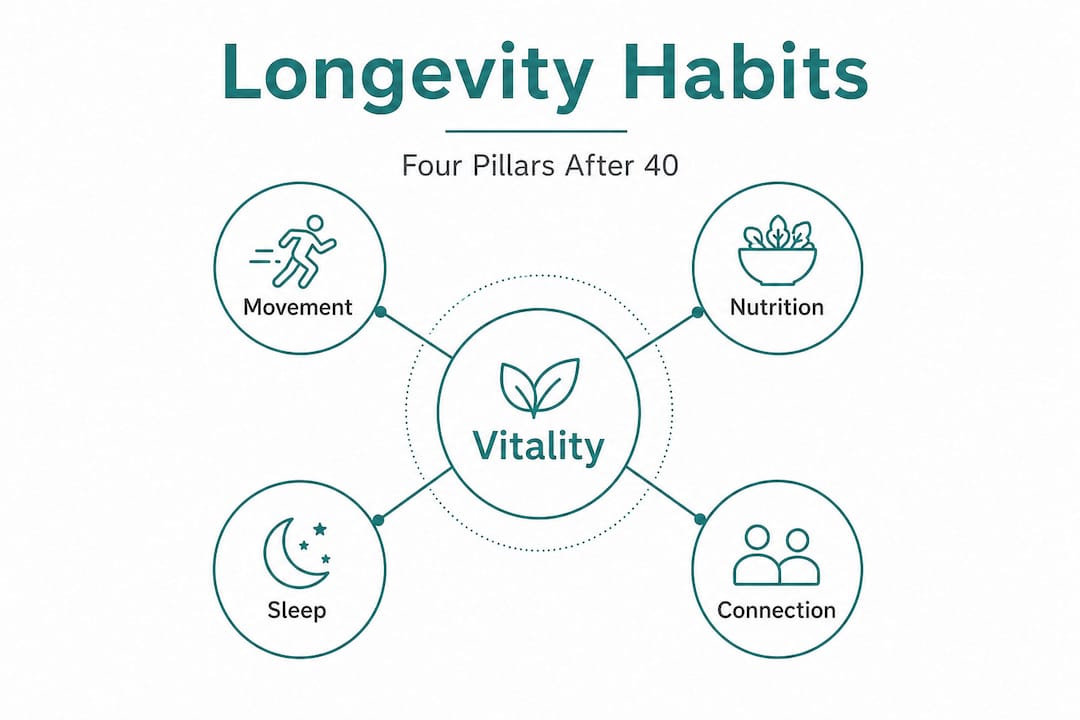
Research tracking large adult populations shows that lifestyle mediated 5.1% to 33.6% of observed differences in long-term mortality across groups. That range is wide because the impact depends on which habits you combine and how consistently you maintain them. A single change, such as drinking less alcohol, moves the needle modestly. A cluster of positive habits, including regular movement, a nutritious diet, adequate sleep, and meaningful social contact, can shift your trajectory substantially.
The biological pathways involved are well documented. Physical activity reduces systemic inflammation, improves insulin sensitivity, and supports cardiovascular function. Good nutrition supplies the raw materials your cells need to repair themselves efficiently. Sleep allows the body to clear metabolic waste products from the brain and consolidate immune memory. Social connection, which is often underestimated, reduces chronic stress hormones that damage arterial walls and suppress immune response over time.
What makes the evidence particularly compelling is that these benefits are not limited to younger adults. Even at age 80+, a low modifiable risk factor score reduced mortality by 40.7%. That figure should change the way you think about whether it is “worth it” to make changes later in life. It clearly is.
“Modifiable lifestyle factors remain among the most powerful tools available for extending healthspan, even when genetic risk is elevated.”
The key mediators, physical activity, nutrition, sleep, and social connection, work in concert rather than isolation. Improving one tends to support the others. Better sleep, for example, makes exercise feel more manageable, and regular exercise improves sleep quality in return. For practical guidance on which nutrients support these pathways, the research on science-backed longevity nutrients is a useful starting point.
| Lifestyle factor | Primary biological mechanism | Longevity-relevant outcome |
|---|---|---|
| Physical activity | Reduces inflammation, improves cardiovascular efficiency | Lower all-cause mortality |
| Nutrition | Supplies cellular repair substrates, reduces oxidative stress | Reduced metabolic disease risk |
| Sleep (7–9 hours) | Clears neurological waste, restores immune function | Lower cardiovascular and cognitive risk |
| Social engagement | Reduces cortisol and chronic stress load | Lower depression and mortality risk |
Key take-aways for this section:
- Lifestyle changes affect mortality through multiple, interconnected pathways.
- The effect size is clinically meaningful, even for people with high genetic risk.
- Age is not a barrier. Late-life improvements still deliver measurable benefit.
Pro Tip: Focus on overlapping habits. Walking with a friend, for instance, addresses physical activity and social connection simultaneously, doubling the benefit for the same time investment.
Healthy lifestyle patterns: what actually makes a difference?
Understanding the mechanisms is helpful, but what practical habits matter most? Evidence shows specific patterns influence healthspan and lifespan.
Physical activity and multifactor lifestyle patterns reduce mortality risk in older adults by 20 to 29 percent, according to data from large nutritional cohorts. That reduction is comparable to the effect of some prescribed medications, which makes the case for lifestyle change as a genuine clinical strategy rather than a soft option.

The Mediterranean dietary approach consistently appears at the top of the evidence base. Mediterranean dietary programmes outperform minimal interventions for both cardiovascular and all-cause mortality. This pattern emphasises vegetables, legumes, whole grains, oily fish, olive oil, and moderate amounts of nuts and dairy, while limiting processed meat and refined sugars. It is not a restrictive diet in the conventional sense. Variety and flavour are central to it, which supports long-term adherence.
Ranked lifestyle factors by evidence strength for longevity:
- Regular moderate-to-vigorous physical activity (most consistent evidence)
- A predominantly plant-based, whole-food dietary pattern
- Quality sleep of seven to nine hours per night
- Not smoking or quitting if you currently smoke
- Limiting alcohol consumption to low or moderate levels
- Maintaining a healthy body weight through sustainable habits
- Sustained social engagement and sense of purpose
The ranking matters because it tells you where to focus first. Many adults over 40 instinctively reach for supplements before addressing movement and dietary quality. The evidence suggests this is the wrong order of priority.
| Approach | Evidence quality | Risk reduction estimate |
|---|---|---|
| Multifactor lifestyle cluster | High (RCT and cohort) | 20–40% lower all-cause mortality |
| Mediterranean diet alone | High (multiple RCTs) | 15–25% lower cardiovascular risk |
| Supplement use (general) | Moderate to low | Variable; most significant when correcting deficiency |
| Single habit change | Moderate | 5–10% at most |
The comparison above is instructive. No single change, and no single supplement, comes close to the combined effect of sustained, multi-domain lifestyle improvement. For more detail on how diet specifically shapes outcomes after 40, the overview of diet and healthy ageing outlines the research clearly. If you are interested in emerging dietary approaches, anti-ageing nutrition trends covers recent developments in the field for 2026.
The practical message is straightforward. Start with the lowest-effort positive change available to you. Even a 10-minute daily walk improves cardiovascular markers within weeks. Progress builds momentum. Momentum builds habit.
Physical activity benchmarks for longevity
Physical activity stands out as a cornerstone habit, so here is how much you need and how to approach it at any age.
The WHO activity and sedentary guidance provides evidence-based targets designed to reduce disability and mortality risk in adults over 40. The core recommendation is 150 to 300 minutes of moderate-intensity aerobic activity per week, or 75 to 150 minutes of vigorous-intensity activity. Muscle-strengthening exercises are recommended on two or more days per week in addition to aerobic work.
These numbers can feel daunting if you are starting from a low baseline. They should not. Research consistently shows that even moving from no activity to a small amount delivers disproportionately large benefits. The steepest part of the risk reduction curve sits at the bottom. Going from sedentary to lightly active reduces mortality risk more than going from moderately active to very active.
| Activity level | Weekly minutes (moderate) | Estimated mortality risk reduction |
|---|---|---|
| Sedentary | 0 | Baseline (highest risk) |
| Low activity | 60–90 | 20–25% reduction |
| Meeting WHO minimum | 150 | 30–35% reduction |
| Meeting WHO target | 300 | Up to 40% reduction |
| Exceeding WHO target | 450+ | Diminishing returns; injury risk rises |
Effective activity types for adults over 40:
- Aerobic exercise: Brisk walking, cycling, swimming, dancing. These support cardiovascular function and metabolic health.
- Resistance training: Bodyweight exercises, free weights, resistance bands. This preserves muscle mass, which declines with age, and supports bone density.
- Balance and flexibility work: Yoga, tai chi, stretching. These reduce fall risk, which becomes a significant mortality factor after 65.
- Incidental movement: Standing desks, walking meetings, taking stairs. These add up and offset the harms of prolonged sitting.
Pro Tip: Combining resistance and aerobic training in the same week is more effective for longevity than focusing on just one type. Aim for at least two resistance sessions alongside your aerobic activity. For a broader look at how staying active connects to overall vitality after 40, the evidence is consistent and reassuring.
Adherence is the deciding variable. A moderate exercise routine you sustain for years outperforms an intensive programme you abandon after three months. Choose activities you find genuinely enjoyable or socially rewarding. Habit formation research shows that enjoyment is the strongest predictor of long-term consistency, ahead of motivation or discipline.
Supplements for longevity: what the evidence really shows
Dietary and activity changes are cornerstones, but what about supplements? Let us clarify what role, if any, they should play.
The honest answer is that supplements occupy a supporting role, not a leading one. Their greatest value lies in correcting genuine deficiencies, states where your body lacks a nutrient it cannot produce or obtain adequately from food. Vitamin D is a clear example. Many adults over 40 have suboptimal levels, particularly in northern latitudes with limited sun exposure. Correcting this deficiency has measurable effects on immune function, bone density, and muscle performance.
However, taking supplements beyond what your body needs does not reliably translate into disease prevention or extended lifespan. Vitamin D3 reduced telomere attrition but did not prevent type 2 diabetes in RCTs. This is a nuanced finding. It shows that supplementation can influence cellular-level markers of ageing, specifically the rate at which telomeres shorten, without necessarily preventing the clinical diseases associated with accelerated ageing. Similarly, omega-3 did not significantly affect longevity biomarkers in randomised controlled trials when studied in isolation.
Supplements with the clearest evidence base for adults over 40:
- Vitamin D: Relevant for those with confirmed deficiency; supports bone, muscle, and immune health.
- Magnesium: Commonly suboptimal in older adults; supports sleep quality, energy metabolism, and cardiovascular function.
- B12: Absorption declines with age; supplementation is often justified, particularly for those on plant-based diets.
- Omega-3 fatty acids: Modest cardiovascular benefits; most useful as part of a broader dietary strategy.
- Creatine: Growing evidence for muscle preservation and cognitive support in adults 50+.
“Supplements are not a shortcut. They work best when they are filling a specific nutritional gap, not compensating for poor lifestyle habits across the board.”
The practical framework is simple: test where possible, correct what is low, and use supplements as part of a broader plan rather than as a replacement for one. For a detailed review of what is supported by current research, the guide to evidence-backed supplements is worth reading. If you are thinking about how different supplements interact, the overview of supplement synergy for longevity addresses this specifically.
What most longevity advice misses and what actually works
Here is the candid view after reviewing both the research and the way longevity advice gets communicated to the public. Most of it overcomplicates the message or focuses on the wrong things entirely.
The supplement industry in particular tends to frame products as the active intervention and lifestyle as the background context. The evidence runs in the opposite direction. Food, movement, sleep, and social connection are the primary variables. Supplements are the background context, relevant when they fill a gap, but never the engine of the result.
The other persistent problem is single-habit thinking. Countless articles and programmes promise that one change, whether it is intermittent fasting, cold water immersion, or a specific supplement stack, will transform your health trajectory. The data does not support this framing. The power lies in clustering multiple positive habits over an extended period. Each habit reinforces the others. The sum is consistently greater than the parts.
What the evidence also makes clear, and what tends to get quietly omitted from longevity content aimed at older adults, is that it is genuinely never too late. The 40.7% mortality reduction seen in adults over 80 with low modifiable risk factor scores is not a statistical quirk. It reflects real biological plasticity. The body retains meaningful capacity to respond to improved conditions throughout the lifespan.
The most practical thing you can do right now is audit your current habits honestly across four domains: movement, nutrition, sleep, and social engagement. Identify the weakest area. Make one concrete change there this week. Build from that foundation rather than overhauling everything simultaneously, which rarely sticks.
For a structured guide to which supplements for healthy ageing genuinely earn their place within a broader lifestyle strategy, the evidence-based breakdown is clear and practical.
Next steps: boost your vitality with science-backed support
If the evidence in this article has prompted you to take a more structured approach to your health after 40, the logical next step is combining strong lifestyle foundations with targeted nutritional support where genuine gaps exist.
At Vivetus, the focus is on scientifically supported nutritional products that fit within an evidence-based approach to healthy ageing. The Energy & Vitality bundle is designed for adults who want targeted support for energy, metabolic function, and overall vitality, as a complement to an active lifestyle rather than a replacement for one. Orders over €50 include free shipping, making it straightforward to get started without unnecessary cost. Browse the full range and build a plan that works alongside your lifestyle changes.
Frequently asked questions
Does improving my lifestyle really offset bad genetics for longevity?
Yes. Studies show that healthy lifestyle habits lower mortality risk even for people with higher genetic risk for shorter lifespan. A low modifiable risk factor score delivered measurable benefit even in those with elevated genetic risk profiles.
What is the single most important habit for longevity after 40?
There is no single key habit. A combination of regular physical activity, a healthy diet, quality sleep, and social engagement delivers the most consistent results. Multi-factor lifestyle patterns reduce risk far more effectively than any one change alone.
Is it too late to start making lifestyle changes at 70 or 80?
No. Research on adults aged 80 and over shows that low modifiable risk scores reduced death risk by over 40%, demonstrating that meaningful benefit is achievable at any age.
Do supplements help you live longer?
Supplements can support health where genuine deficiencies exist, but evidence for direct life extension is limited and inconsistent. RCT data shows vitamin D influenced telomere biology but did not prevent disease outcomes, and omega-3 showed no significant effect on longevity biomarkers in isolation.
What are the WHO exercise recommendations for adults over 40?
The WHO recommends adults aged 40 and over aim for at least 150 to 300 minutes per week of moderate-intensity aerobic activity, combined with muscle-strengthening exercises on two or more days per week.