

The role of vitamins for energy: what really works
TL;DR:
- Vitamins are essential micronutrients that act as coenzymes to facilitate energy production in the body. Deficiencies in B vitamins and vitamin D can cause fatigue by impairing metabolic pathways and oxygen transport. Supplementing beyond deficiency levels does not boost energy, emphasizing the importance of accurate testing and a varied diet for optimal vitality.
Vitamins are defined as essential micronutrients that enable enzymes to convert/11%3A_Nutrients_Important_for_Metabolism_and_Blood_Function/11.02%3A_Nutrients_Important_for_Metabolism) food into ATP, the cellular currency of energy. They supply no calories themselves. Instead, they act as coenzymes and cofactors that keep your metabolic machinery running. Without adequate levels of B vitamins, vitamin D, and several others, the biochemical pathways that release energy from carbohydrates, fats, and proteins simply stall. Understanding the role of vitamins for energy means recognising that sufficiency matters far more than excess, and that diet is your most reliable foundation.
Which vitamins are most important for energy production?

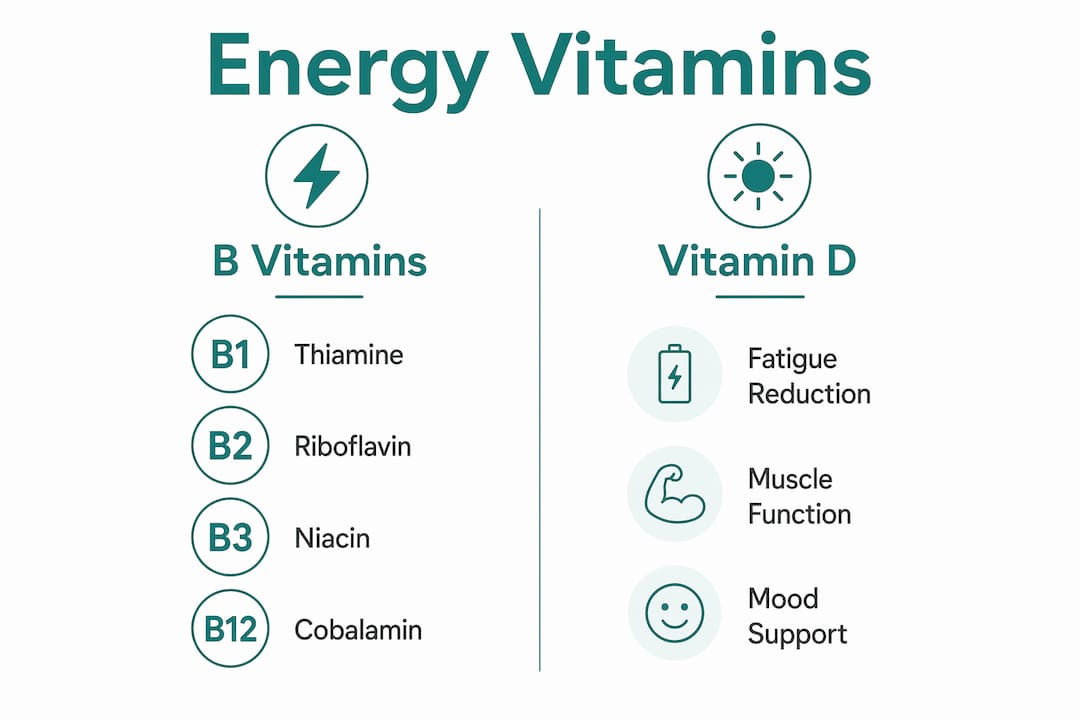
The B-complex group is the most directly involved in vitamins for energy production. B1 (thiamine), B2 (riboflavin), B3 (niacin), B5 (pantothenic acid), B6 (pyridoxine), and B12 (cobalamin) each participate in specific enzymatic steps that break down macronutrients and release ATP. Remove any one of them and you create a bottleneck in the entire process.
Here is how each major vitamin contributes:
- Vitamin B1 (Thiamine): Drives the conversion of pyruvate into acetyl-CoA, a gateway step in cellular respiration. Found in wholegrains, legumes, and pork.
- Vitamin B2 (Riboflavin): Forms FAD and FMN coenzymes used in the electron transport chain. Found in dairy, eggs, and leafy greens.
- Vitamin B3 (Niacin): Produces NAD+, the most abundant electron carrier in metabolism. Found in poultry, fish, and peanuts.
- Vitamin B5 (Pantothenic acid): Forms coenzyme A, which is central to the citric acid cycle. Found in avocado, mushrooms, and sunflower seeds.
- Vitamin B6 (Pyridoxine): Supports haemoglobin formation, which delivers oxygen to tissues for aerobic energy production. Found in poultry, bananas, and potatoes.
- Vitamin B12 (Cobalamin): Maintains myelin sheaths and supports red blood cell production for oxygen transport. Found almost exclusively in animal products.
- Vitamin D: Influences mitochondrial function and muscle performance. Deficiency is strongly associated with persistent fatigue.
Pro Tip: If you eat a varied diet but still feel persistently tired, vitamin D and B12 are the two most worth testing first. Both deficiencies are common and both respond well to targeted correction.
| Vitamin | Primary Energy Role | Key Food Sources | Deficiency Symptom |
|---|---|---|---|
| B1 (Thiamine) | Pyruvate to acetyl-CoA conversion | Wholegrains, legumes, pork | Fatigue, nerve damage |
| B2 (Riboflavin) | Electron transport chain cofactor | Dairy, eggs, leafy greens | Fatigue, mouth sores |
| B3 (Niacin) | NAD+ production for metabolism | Poultry, fish, peanuts | Fatigue, skin changes |
| B5 (Pantothenic acid) | Coenzyme A formation | Avocado, mushrooms | Fatigue, irritability |
| B6 (Pyridoxine) | Haemoglobin and oxygen transport | Bananas, poultry | Anaemia, low energy |
| B12 (Cobalamin) | Red blood cell production | Meat, fish, dairy | Fatigue, cognitive fog |
| Vitamin D | Mitochondrial and muscle function | Oily fish, sunlight | Fatigue, muscle weakness |
The role of B vitamins in energy is not isolated. These vitamins operate in interdependent enzyme systems, meaning a shortfall in one can limit the effectiveness of the others. This is why a broad dietary approach tends to outperform single-nutrient supplementation in otherwise healthy adults.
How do vitamin deficiencies affect energy and fatigue?
Vitamin deficiencies reduce energy by creating specific gaps in metabolic pathways. When a coenzyme is missing, the enzyme it supports cannot function at full capacity. ATP production slows. Oxygen delivery drops. The result is fatigue that no amount of sleep fully resolves.
The consequences vary by vitamin:
- Thiamine (B1) deficiency disrupts the conversion of glucose into usable energy. Severe deficiency causes beriberi and Wernicke encephalopathy, but even mild insufficiency produces persistent fatigue and cognitive slowing.
- B12 deficiency reduces red blood cell production, lowering the oxygen-carrying capacity of blood. Tissues receive less oxygen and generate less ATP. Fatigue, brain fog, and weakness follow.
- Vitamin D deficiency impairs mitochondrial function directly. A randomised controlled trial found that vitamin D replacement significantly reduced fatigue symptoms in patients with ME/CFS who were vitamin D insufficient.
- B6 deficiency reduces haemoglobin synthesis, compounding the oxygen transport problem seen with B12 shortfalls.
Correcting a vitamin deficiency does not give you extra energy. It restores the energy capacity your body should already have.
A six-month double-blind placebo-controlled trial confirmed that vitamin D3 supplementation produced significant improvements in fatigue and mood in perimenopausal women with confirmed vitamin D deficiency. The key word is confirmed. The benefit was specific to those who were deficient.
Certain groups face higher deficiency risk and deserve particular attention. Older adults absorb B12 less efficiently due to reduced stomach acid. People taking metformin for type 2 diabetes face elevated B12 depletion risk. Those with limited sun exposure are prime candidates for vitamin D insufficiency. Vegans and vegetarians frequently lack B12 from dietary sources alone.
Can extra vitamins boost energy if you are not deficient?
The short answer is no. Excess B vitamins/11%3A_Nutrients_Important_for_Metabolism_and_Blood_Function/11.02%3A_Nutrients_Important_for_Metabolism) are water-soluble and excreted in urine rather than stored. Taking more than your body needs does not accelerate metabolism or produce additional ATP. The metabolic pathways are already running at capacity.
This fact sits at the centre of a significant marketing problem. Energy drinks and high-dose B vitamin supplements are sold on the promise of vitality and performance. The perceived energy boost most people report comes from caffeine and sugar, not from the vitamins listed on the label. The vitamins are present in quantities that look impressive but deliver no additional physiological effect in a well-nourished person.
The same logic applies to vitamin D. Supplementing beyond sufficiency does not improve energy further. The benefit plateaus once deficiency is corrected. Taking high doses without confirmed deficiency adds cost and, in the case of fat-soluble vitamins like D, carries a risk of toxicity over time.
- Vitamins are facilitators of energy metabolism, not fuel sources.
- Water-soluble B vitamins in excess are excreted, not stored or used.
- Fat-soluble vitamins (D, A, E, K) accumulate and can reach toxic levels with prolonged high-dose supplementation.
- Perceived energy from supplements is most often attributable to stimulants, not vitamins.
Pro Tip: Read the full ingredient list on any energy supplement before purchasing. If caffeine or sugar appears in the first three ingredients, the vitamin content is secondary to the stimulant effect.
How to optimise vitamin intake for energy and vitality
Diet is the most reliable way to maintain adequate vitamin levels for sustained energy. A varied diet covering all food groups provides the full B-complex alongside vitamin D from oily fish and eggs. No single food covers everything, which is why dietary diversity matters more than any individual superfood.
Practical steps to support your vitamin status:
- Eat wholegrains daily to cover B1, B2, and B3 without supplementation.
- Include animal protein three to four times per week for B12, B6, and B2. If you follow a plant-based diet, B12 supplementation is not optional; it is necessary.
- Get 15–20 minutes of midday sun exposure on arms and legs during summer months to support vitamin D synthesis. In winter, particularly in northern Europe, dietary sources and supplementation become more relevant.
- Test before you supplement for B12 and vitamin D. Clinical guidance from Johns Hopkins recommends testing both, especially in older adults and those on medications affecting absorption.
- Consult a healthcare professional before starting high-dose supplements. Self-prescribing megadoses of fat-soluble vitamins without confirmed deficiency is not a sound approach.
Pro Tip: A standard blood panel for B12 and 25-hydroxyvitamin D costs relatively little and gives you a precise baseline. It removes the guesswork entirely and tells you whether supplementation will actually make a difference for your energy levels.
For those over 50, the importance of vitamins for vitality increases as absorption efficiency declines with age. B12 absorption depends on intrinsic factor, a protein produced in the stomach that diminishes over time. Vitamin D synthesis in the skin also becomes less efficient after 50. These are not theoretical concerns; they are well-documented physiological changes that make proactive monitoring worthwhile.
Lifestyle factors compound the picture. Chronic stress depletes B vitamins faster. Alcohol interferes with thiamine absorption significantly. Poor sleep reduces the body’s ability to use nutrients efficiently. Addressing these factors alongside dietary choices produces more consistent results than supplementation alone.
Key takeaways
Vitamins support energy by enabling metabolic enzymes to function, and correcting a deficiency restores normal energy capacity rather than creating an enhancement beyond it.
| Point | Details |
|---|---|
| Vitamins are coenzymes, not fuel | They enable ATP production but supply no calories themselves. |
| B-complex vitamins are central | B1, B2, B3, B5, B6, and B12 each drive specific steps in energy metabolism. |
| Deficiency causes real fatigue | Missing a single B vitamin or vitamin D creates a measurable bottleneck in energy output. |
| Excess does not help | Water-soluble vitamins are excreted when surplus; supplementing beyond sufficiency adds no energy benefit. |
| Test before supplementing | Blood testing for B12 and vitamin D identifies genuine deficiency and guides targeted correction. |
Vitamins and energy: what the evidence actually shows
From my perspective, the most persistent misconception I encounter is the idea that more vitamins automatically means more energy. The science does not support this. Vitamins are rate-limiters in metabolic pathways, not accelerators. Once the pathway is running at full capacity, adding more cofactors changes nothing.
What I find genuinely useful in practice is the shift towards testing first. The people who report the most meaningful improvements in energy after addressing their vitamin status are those who had a confirmed deficiency to begin with. B12 and vitamin D are the two I see most frequently overlooked, particularly in adults over 50 and in those following plant-based diets.
The marketing around energy supplements frustrates me because it conflates the stimulant effect of caffeine with the metabolic function of vitamins. These are entirely different mechanisms. Caffeine blocks adenosine receptors and creates a perception of alertness. B vitamins support the enzymatic machinery that produces ATP over hours and days. Mixing them in the same product and attributing the effect to the vitamins is misleading.
My practical recommendation is straightforward. Prioritise dietary variety, get tested if you have persistent fatigue, and supplement only what testing confirms you need. Emerging research into personalised nutrition and individual variation in vitamin metabolism is promising, but the fundamentals have not changed. Adequacy, not excess, is the target.
— Jord
Support your energy levels with Vivetus
Vivetus provides evidence-based nutritional products designed specifically for healthy ageing and sustained vitality. If this article has prompted you to take a closer look at your vitamin status, Vivetus is a practical starting point for exploring targeted nutritional support.

The Vivetus catalogue includes products formulated around the vitamins most relevant to energy metabolism, including B-complex formulations and vitamin D. Each product is selected with scientific backing in mind, reflecting the brand’s focus on quality and efficacy. Visit Vivetus to explore the full range and find options suited to your nutritional needs and health goals.
FAQ
What is the role of vitamins for energy production?
Vitamins act as coenzymes and cofactors that enable enzymes to convert carbohydrates, fats, and proteins into ATP. They do not supply energy directly but are required for every step of the metabolic process.
Which b vitamins are most important for energy levels?
B1, B2, B3, B5, B6, and B12 are all directly involved in energy metabolism. B12 and B6 also support oxygen transport through haemoglobin and red blood cell production, which affects how efficiently tissues generate energy.
Do vitamins help with fatigue if you are not deficient?
Supplementing vitamins does not improve energy in people who already have adequate levels. The evidence shows that fatigue improvement from supplementation applies specifically to those with confirmed deficiencies.
How does vitamin d affect energy levels?
Vitamin D deficiency is associated with persistent fatigue and reduced muscle function. Correcting insufficiency through supplementation has been shown to reduce fatigue symptoms in clinical trials, particularly in women and those with chronic fatigue conditions.
When should you get your vitamin levels tested?
Testing is advisable if you experience persistent fatigue, follow a plant-based diet, are over 50, or take medications such as metformin. Clinical guidance recommends testing B12 and vitamin D as a baseline before starting any supplementation programme.