

Anti-ageing nutrition: 2026's top longevity trends
TL;DR:
- Consistent whole-diet patterns, especially plant-rich foods, are key to healthy aging.
- Microbiome diversity and timing of eating influence aging-related inflammation and cellular repair.
- Evidence supports combining diet and targeted supplements for effective longevity strategies.
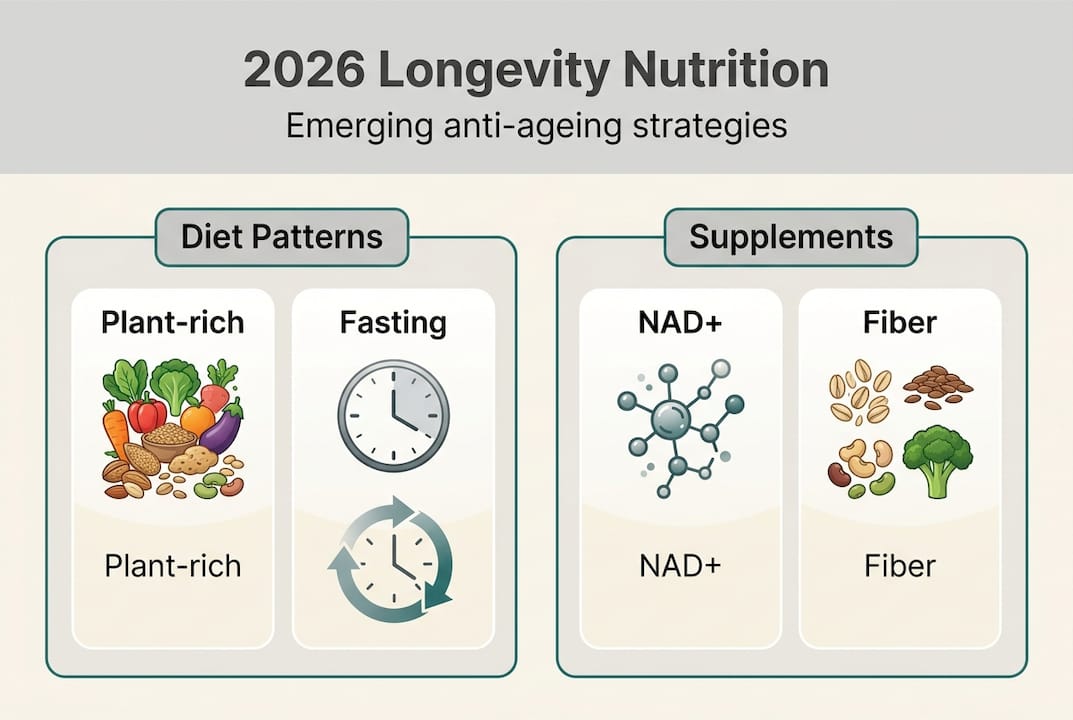
Forget the idea that one superfood will slow your biological clock. The real story of anti-ageing nutrition in 2026 is far more practical and, frankly, more encouraging. Research from Blue Zone populations and centenarian studies confirms that key nutrition trends revolve around consistent dietary patterns, not miracle ingredients. What follows covers the science behind healthy ageing, the plant-rich diets reshaping how we eat, the growing case for time-restricted eating, and how to navigate the supplement market without wasting money on unsupported claims.
Table of Contents
- Why anti-ageing nutrition matters: The science of longevity
- Plant-rich diets and the microbiome: 2026’s nutrition foundation
- From fasting to flexibility: The power of eating patterns
- Supplements and synergy: Navigating the longevity market
- Why there’s no one-size-fits-all: Rethinking anti-ageing nutrition
- Take the first step towards healthier ageing
- Frequently asked questions
Key Takeaways
| Point | Details |
|---|---|
| Synergy over single foods | The biggest anti-ageing gains come from combining smart dietary patterns, not relying on magic superfoods. |
| Plant-based focus | A fibre- and polyphenol-rich diet supports your gut, lowers inflammation, and activates key longevity pathways. |
| Balance fasting and nutrition | Time-restricted eating can encourage healthy ageing if used responsibly and combined with whole foods. |
| Supplements need evidence | Choose supplements with strong scientific backing and prioritise synergy with whole foods for best results. |
Why anti-ageing nutrition matters: The science of longevity
Ageing is not simply a matter of time passing. At the cellular level, it involves inflammation, oxidative stress, and shifts in how your body senses and responds to nutrients. Understanding these mechanisms helps explain why certain dietary patterns produce measurable results while others do not.
Three nutrient-sensing pathways sit at the centre of longevity research:
- AMPK (AMP-activated protein kinase): Activated by caloric restriction and polyphenols, it promotes cellular repair and energy efficiency.
- Sirtuins: A family of proteins activated by compounds like resveratrol and by fasting, linked to DNA repair and reduced inflammation.
- mTOR (mechanistic target of rapamycin): When chronically overactivated by excess protein or calories, it accelerates cellular ageing rather than growth.
These pathways do not operate in isolation. Diet, sleep, movement, and stress all feed into them simultaneously, which is precisely why no single food or supplement can replicate what a well-structured eating pattern achieves over years.
The Blue Zones offer perhaps the most persuasive real-world evidence. Populations in Sardinia, Okinawa, and the Nicoya Peninsula in Costa Rica share dietary patterns rich in legumes, whole grains, and vegetables, with minimal processed food. Their diets are associated with 20 to 25% lower mortality compared to Western dietary norms.
Statistic to note: Researchers tracking Blue Zone populations found consistent reductions in cardiovascular and metabolic disease, pointing to dietary pattern rather than any single nutrient as the operative factor.
This is the foundation of 2026’s approach to anti-ageing nutrition. Our graceful ageing guide expands on how these pathways connect to specific supplement choices. The shift away from isolated nutrients and towards synergistic, whole-diet strategies reflects where the science has been pointing for years.
Plant-rich diets and the microbiome: 2026’s nutrition foundation
The gut microbiome has moved from niche research topic to mainstream nutrition priority, and for good reason. The trillions of microorganisms in your digestive tract influence inflammation, immune function, and even cognitive health. What you feed those microorganisms matters considerably.
Plant fibres are the primary fuel source for beneficial gut bacteria. Diets built around legumes, whole grains, nuts, leafy vegetables, and fermented foods supply the diversity of fibres that a healthy microbiome requires. One particularly interesting outcome of this process is Urolithin A, a compound produced when gut bacteria metabolise polyphenols found in pomegranates and berries. Urolithin A supports mitophagy, the process by which cells clear out damaged mitochondria. The catch is that only 40% of people naturally produce Urolithin A from dietary polyphenols, which is one reason supplementation is attracting serious scientific interest.
The protein debate is equally relevant. High animal protein intake can chronically activate mTOR, which may accelerate cellular ageing. Moderate protein intake from plant sources tends to support longevity pathways more effectively.
| Diet approach | mTOR activation | Microbiome diversity | Longevity pathway support |
|---|---|---|---|
| High animal protein | High | Lower | Reduced |
| Moderate plant protein | Moderate | Higher | Enhanced |
| Plant-rich, fibre-focused | Low to moderate | Highest | Strongest |
Pro Tip: Aim for at least 30 different plant foods per week. Research consistently links greater plant variety to higher microbiome diversity, which correlates with reduced inflammatory markers.
Top plant foods supported by 2026 longevity research include:
- Legumes: Lentils, chickpeas, black beans
- Whole grains: Oats, barley, farro
- Nuts and seeds: Walnuts, flaxseed, almonds
- Cruciferous vegetables: Broccoli, kale, Brussels sprouts
- Fermented foods: Kefir, sauerkraut, miso
Reviewing supplements for healthy ageing alongside your dietary changes can help identify where targeted support is genuinely warranted.
From fasting to flexibility: The power of eating patterns
Not just what you eat, but when you eat, has become one of the more compelling areas of longevity research. Intermittent fasting and caloric restriction both trigger autophagy, the cellular recycling process that clears damaged proteins and organelles. Think of autophagy as routine maintenance for your cells. Without it, cellular debris accumulates and accelerates the ageing process.
Metabolic flexibility refers to the body’s ability to switch efficiently between burning glucose and fat for fuel. People with greater metabolic flexibility tend to have lower fasting insulin, reduced inflammation, and better long-term cardiometabolic health. Fasting supports this flexibility by periodically depleting glycogen stores and prompting the body to adapt.

Centenarian data shows that an 11 to 12 hour eating window consistently associates with reduced inflammaging (chronic low-grade inflammation linked to ageing) and improved insulin sensitivity.
| Eating pattern | Eating window | Key benefit | Evidence strength |
|---|---|---|---|
| Standard Western diet | 14 to 16 hours | None specific | N/A |
| Time-restricted eating | 10 to 12 hours | Autophagy, insulin control | Strong |
| 5:2 fasting | Variable | Metabolic reset | Moderate |
| Alternate day fasting | Variable | Weight and inflammation | Moderate |
If you want to start time-restricted eating safely, follow these steps:
- Establish your current eating window by noting your first and last meal times for one week.
- Reduce the window gradually, moving your last meal 30 minutes earlier every few days.
- Aim for a 12-hour window as a sustainable starting point before considering tighter restrictions.
- Stay well hydrated during fasting periods with water and plain herbal teas.
- Monitor your energy and sleep for the first month and adjust if you notice persistent fatigue.
Avoid drastic approaches from the outset. Consistency across weeks and months produces far more measurable results than aggressive short-term fasting followed by abandonment.
Supplements and synergy: Navigating the longevity market
The supplement industry targeting healthy ageing is growing rapidly. The longevity ingredients market is projected to rise from $984 million in 2025 to $1.7 billion by 2033, driven largely by NAD+ precursors, probiotics, and antioxidants. EU markets are forecast to grow strongly through to 2035, supported by increasing scientific validation.
The most researched supplement categories in 2026 include:
- NAD+ precursors (NMN, NR): Support mitochondrial function and sirtuin activation
- Probiotics and prebiotics: Directly support microbiome diversity and gut barrier integrity
- Urolithin A: Relevant for those who cannot produce it endogenously
- Antioxidants (resveratrol, quercetin, astaxanthin): Reduce oxidative stress and support anti-inflammatory pathways
- Omega-3 fatty acids: Well-documented for cardiovascular and cognitive support
Pro Tip: Prioritise supplements backed by human randomised controlled trials rather than animal studies alone. Check whether the product specifies the dose used in research, and look for third-party testing certificates.
“No single superfood or supplement delivers what a synergistic dietary pattern achieves. The evidence from Blue Zone research consistently points to pattern over pill.”
Human trials do show that NAD+ supplementation supports muscle endurance and cognitive markers in older adults. But these results occur within the context of healthy overall diets, not as standalone interventions. Similarly, top antioxidants for ageing produce the strongest results when combined with a polyphenol-rich diet rather than used to compensate for a poor one.
Synergy is the operative word. Combining dietary patterns with targeted, evidence-backed supplements consistently outperforms either approach alone.
Why there’s no one-size-fits-all: Rethinking anti-ageing nutrition
Here is the part most articles skip over. Genetic variation, gut microbiome composition, metabolic history, and lifestyle factors all determine how any individual responds to a given diet or supplement. Two people can follow identical eating patterns and experience measurably different outcomes in inflammatory markers, blood glucose, and energy levels.
The data is clear that no single superfood and no single supplement delivers across the board. What works is a pattern, built from diverse plants, appropriate protein sources, structured eating windows, and targeted supplementation where genuine gaps exist.
The uncomfortable reality is that most people reach for the newest supplement trend before addressing the quality of their overall diet. That order of priority is backwards. A high-quality probiotic will have limited effect if the diet provides no prebiotic fibre to sustain it.
Personalisation does not require expensive genetic testing. It requires honest assessment of your current diet, consistent monitoring of how changes affect your energy, digestion, and sleep, and a willingness to adjust based on results rather than marketing. Exploring supplements for healthy ageing works best when it starts from that informed, individualised position.
Take the first step towards healthier ageing
Applying these strategies requires reliable information and products that are genuinely supported by research. Vivetus brings together evidence-based supplements and detailed nutritional guidance in one place, designed for people who want practical, scientifically grounded support for healthy ageing.
Whether you are exploring plant-based dietary shifts, considering time-restricted eating, or assessing which supplements are worth your investment, Vivetus anti-ageing resources provide clear, structured guidance. The full 2026 supplement guide covers NAD+ precursors, antioxidants, and microbiome support in detail, helping you build a strategy that is coherent, personalised, and backed by current evidence.
Frequently asked questions
What are the top anti-ageing nutrition trends for 2026?
Plant-rich diets, microbiome support, intermittent fasting, and scientifically-backed supplements such as NAD+ precursors and antioxidants lead the 2026 trends, all centred on supporting key longevity pathways rather than targeting single nutrients.
Do supplements really help with ageing in 2026?
Certain supplements show solid evidence for muscle and cognitive support, but synergy with diet and long-term consistency matter more than relying on any single product.
Is intermittent fasting safe for everyone?
Most healthy adults tolerate time-restricted eating well, but anyone with a medical condition, particularly diabetes or a history of disordered eating, should consult a healthcare professional first.
How can I tell if a supplement is reputable?
Look for products supported by human clinical trials, transparent ingredient dosing, and third-party testing. The longevity supplement market is growing rapidly, so scientific validation and clear evidence standards are the most reliable filters.