

What is nutritional synergy and why it matters
TL;DR:
- Nutritional synergy occurs when combined nutrients produce health effects greater than their individual contributions. Whole foods exploit this phenomenon through complex matrices and controlled absorption, outperforming isolated supplements. Applying strategic food pairings, such as turmeric with black pepper or vitamin C with iron, enhances nutrient efficacy and supports better health outcomes.
Nutritional synergy is defined as the phenomenon where two or more nutrients or food compounds interact to produce a combined health effect greater than the sum of their individual contributions. This concept, also known as food synergy in nutritional science, sits at the heart of why a varied, whole-food diet consistently outperforms any single supplement or isolated nutrient approach. Understanding nutritional synergy explains why spinach with lemon juice delivers more usable iron than spinach alone, and why turmeric becomes dramatically more potent when paired with black pepper. For anyone focused on vitality and healthy ageing, this is not a minor detail. It is the organising principle behind effective nutrition.
What is nutritional synergy, and what does science say?
Nutritional synergy operates at the biochemical and cellular level. When two nutrients are consumed together, they can enhance each other’s absorption, activate shared metabolic pathways, or reduce the rate at which one is broken down before it reaches target tissues. The result is a biological effect that neither nutrient could achieve independently at the same dose.
Researchers quantify this using a synergy index, a statistical measure of how much greater the combined effect is compared to what you would predict from adding individual effects together. A synergy index of 1.783 has been observed when combining multiple interacting risk factors in disease causation, confirming super-additive effects are real and measurable. A value above 1.0 signals that the combination is genuinely more powerful than the parts, not merely equal to them.
“Nutritional synergy is not a theoretical ideal. It is a measurable biological reality, documented across nutrient absorption studies, epidemiological research, and clinical trials.”
This matters because most nutrition research historically studied single nutrients in isolation. That methodology misses the point. The Mediterranean diet is a well-documented example of synergistic dietary patterns producing superior health outcomes, not because any one food is exceptional, but because the combination of olive oil, vegetables, legumes, fish, and whole grains creates a network of interacting compounds that support cardiovascular, cognitive, and metabolic health simultaneously.
What are the best nutritional synergy examples in everyday foods?
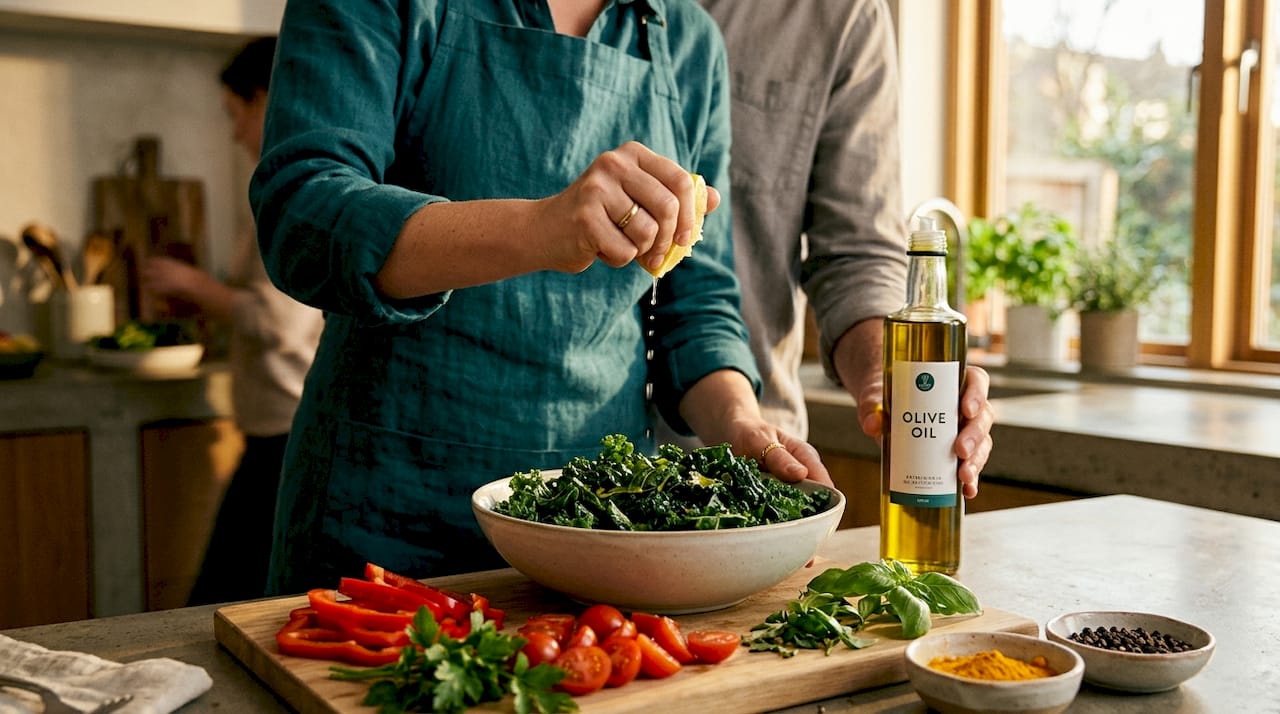
The food synergy concept becomes concrete when you look at specific pairings. These are not obscure combinations requiring specialist knowledge. They appear in everyday meals.
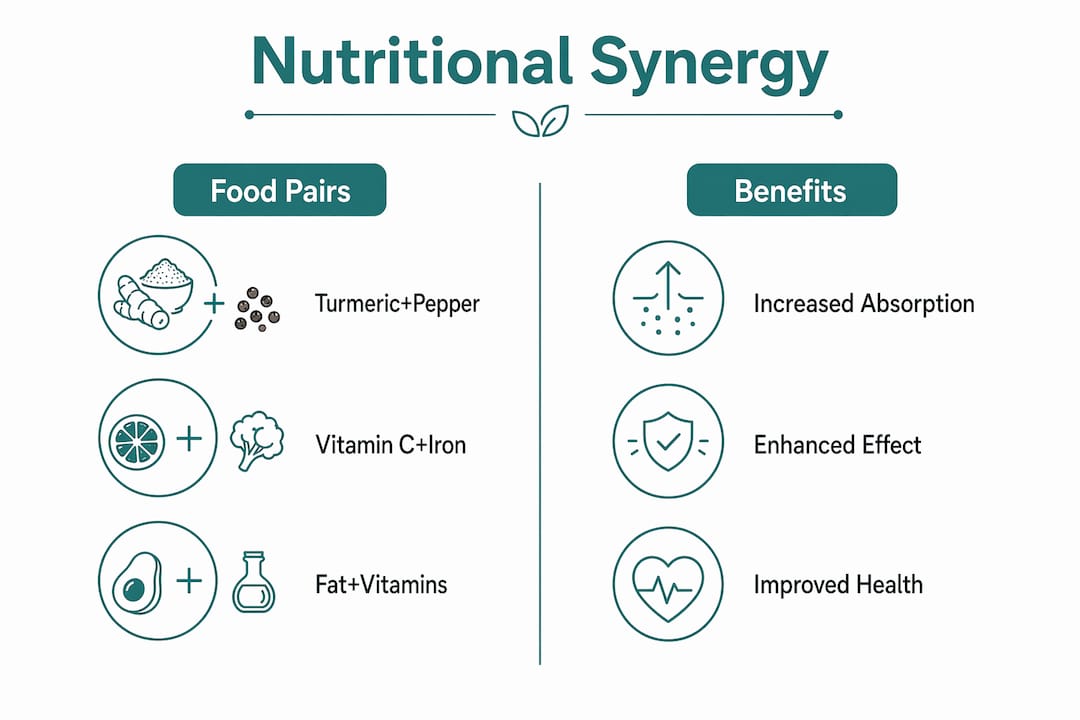
| Food pairing | Synergistic mechanism | Benefit |
|---|---|---|
| Turmeric + black pepper | Piperine inhibits curcumin breakdown | Up to 2,000% greater curcumin absorption |
| Spinach + vitamin C (lemon) | Vitamin C converts non-haem iron | Up to 300% greater iron uptake |
| Broccoli + mustard seeds | Myrosinase activates sulforaphane | Enhanced antioxidant activity |
| Beans + wholegrains | Complementary amino acid profiles | Complete protein from plant sources |
| Calcium-rich foods + vitamin D | Vitamin D regulates calcium transport | Stronger bone mineralisation |
| Fat-soluble vitamins + healthy fats | Dietary fat enables micellar transport | Optimal absorption of vitamins A, D, E, K |
The turmeric and black pepper pairing is one of the most studied examples in nutritional science. Piperine increases curcumin absorption by up to 2,000% by inhibiting the liver enzymes that would otherwise rapidly clear curcumin from the bloodstream. This means a standard turmeric supplement without piperine delivers a fraction of the anti-inflammatory benefit of the same dose taken with black pepper.
Vitamin C and iron absorption follows a different mechanism. Iron absorption rises by up to 300% when non-haem iron from plant sources is consumed alongside vitamin C, because ascorbic acid chemically reduces ferric iron to the ferrous form that intestinal cells can actually transport. Squeezing lemon over a lentil salad is not just culinary preference. It is applied nutritional biochemistry.
Fat-soluble vitamins A, D, E, and K require dietary fat for absorption and also enhance each other’s effects once absorbed. Eating a vitamin D supplement with a fat-free meal can significantly reduce how much you actually absorb. Adding avocado or olive oil to a meal containing these vitamins is a straightforward way to apply synergy principles.
Pro Tip: Dress your leafy green salads with an olive oil-based vinaigrette and add a squeeze of lemon. You will simultaneously activate fat-soluble vitamin absorption and boost iron uptake from the greens in a single step.
How do whole foods differ from isolated supplements in synergy?
The difference between eating a whole food and taking an isolated nutrient extract comes down to what scientists call the food matrix. The food matrix is the physical and chemical structure of a food, including fibre, water, proteins, fats, and thousands of bioactive compounds that collectively regulate how nutrients are released, absorbed, and used by the body.
Whole foods regulate nutrient bioavailability through this matrix in ways that isolated supplements cannot replicate. The matrix slows digestion and absorption, preventing the sharp spikes in blood nutrient levels that occur with high-dose supplements. This bolus effect from isolated supplementation can actually trigger the body’s clearance mechanisms, reducing net benefit. Whole foods deliver nutrients gradually, improving stability and utilisation.
Beyond absorption kinetics, whole foods contain thousands of phytonutrients interacting in complex, non-replicable ways. A single tomato contains lycopene, beta-carotene, vitamin C, potassium, folate, and dozens of polyphenols, all interacting simultaneously. No supplement formulation currently captures this complexity.
Advantages whole foods hold over isolated supplements:
- Phytochemical complexity. Whole foods deliver hundreds of interacting compounds in a single serving, creating synergistic effects no supplement can fully replicate.
- Controlled absorption. The food matrix prevents nutrient spikes and supports steady, sustained uptake throughout digestion.
- Fibre co-delivery. Dietary fibre feeds gut microbiota that in turn produce short-chain fatty acids, supporting nutrient metabolism indirectly.
- Nutrient co-factors. Whole foods naturally pair nutrients with the co-factors needed for their activation, such as magnesium with vitamin D metabolism.
- Reduced competition. Nutrients in whole foods are presented in ratios that minimise competitive absorption, unlike high-dose multi-supplements.
Pro Tip: Supplements work best as targeted additions to a whole-food diet, not replacements for one. Use them to address specific deficiencies identified through testing, and build the foundation with food first.
A common misconception is that a high-quality supplement programme can compensate for a poor diet. The food matrix provides unique benefits that supplementation cannot substitute, which is why the supplement versus diet debate consistently resolves in favour of food as the primary vehicle for nutritional synergy.
How to apply nutritional synergy for better health and vitality
Applying synergy principles does not require a nutritionist or a complex protocol. It requires understanding a few key rules and building them into daily habits.
-
Pair iron-rich plant foods with vitamin C at every meal. Lentils, chickpeas, spinach, and fortified cereals all contain non-haem iron. Adding tomatoes, peppers, citrus juice, or broccoli to the same meal converts that iron into a form your body can absorb efficiently.
-
Always consume fat-soluble supplements and foods with a source of healthy fat. Vitamins A, D, E, and K, along with carotenoids like lycopene and beta-carotene, require fat for absorption. A tablespoon of olive oil, a handful of nuts, or half an avocado is sufficient.
-
Add black pepper to any turmeric-containing dish or supplement. The piperine in black pepper activates curcumin’s bioavailability. This applies equally to turmeric in cooking and to curcumin supplements.
-
Separate calcium and iron intake by at least two hours. Calcium inhibits iron absorption when both are consumed simultaneously. If you take a calcium supplement or eat a high-calcium meal, schedule iron-rich foods or iron supplements at a different time of day.
-
Combine complementary plant proteins. Beans and wholegrains together provide a complete amino acid profile that neither delivers alone. Rice and lentils, hummus on wholegrain bread, or corn tortillas with black beans are practical examples.
-
Use personalised testing to identify your specific gaps. Synergistic nutrient combinations support energy production, immune function, bone health, and cognitive vitality more effectively than single-nutrient approaches. Knowing which nutrients you are deficient in allows you to target pairings that address your actual needs rather than guessing.
Timing and combination of meals is the practical lever most people overlook. Meal timing and pairing determines whether synergistic interactions actually occur in your digestive system, making it as important as the nutrients themselves. Planning two or three meals per week around specific synergistic pairings is a straightforward starting point that delivers measurable results over time. For a broader view of how these principles connect to healthy ageing, the nutritional supplements guide for 2026 from Vivetus provides useful context.
Key takeaways
Nutritional synergy produces measurably greater health outcomes than isolated nutrient intake, making food combinations and timing as important as the nutrients themselves.
| Point | Details |
|---|---|
| Definition of synergy | Nutrients interact to produce combined effects greater than their individual contributions. |
| Whole foods outperform supplements | The food matrix delivers phytochemical complexity and controlled absorption that supplements cannot replicate. |
| Key pairings to apply | Turmeric with black pepper, iron with vitamin C, and fat-soluble vitamins with healthy fats are the highest-impact combinations. |
| Nutrient competition is real | Calcium and iron compete for absorption; separating intake by two hours preserves the benefit of both. |
| Personalisation matters | Identifying individual deficiencies through testing allows targeted synergistic combinations for energy, immunity, and bone health. |
Why synergy thinking changes how I approach nutrition
The shift from thinking about single nutrients to thinking about combinations is one of the most practically useful changes you can make in how you approach your diet. Most people spend years optimising individual supplements, adding vitamin D here, magnesium there, without ever asking whether those nutrients are being absorbed or whether they are working against each other.
What I find most compelling about the food synergy concept is that it validates what traditional food cultures have practised for centuries. Turmeric with black pepper in South Asian cooking. Lemon over iron-rich legumes in Middle Eastern cuisine. Olive oil with vegetables across the Mediterranean. These pairings were not designed by nutritionists. They emerged from generations of observed benefit. Science is now explaining the mechanism.
The research on whole-food matrices also changes how I think about supplementation. Supplements are not inferior by definition. They are genuinely useful for addressing specific, confirmed deficiencies, particularly in the context of healthy ageing and longevity. The problem is treating them as a primary strategy rather than a targeted addition to a synergistic diet.
The future of this field points towards personalised nutrition, where individual microbiome profiles, genetic variants in nutrient metabolism, and blood biomarker data inform which synergistic combinations will work best for a specific person. That is not science fiction. It is already available. The practical implication is that the most effective nutritional approach combines whole-food synergy as the foundation with targeted supplementation guided by personal data.
— Jord
How Vivetus supports your nutritional synergy goals
Vivetus has developed its Energy and Vitality Bundle specifically around the principles of nutritional synergy, combining complementary nutrients that enhance each other’s absorption and effectiveness rather than delivering isolated compounds in high doses. The formulation reflects the science covered in this article: nutrients paired to work together, not compete. If you are looking to apply synergy principles through supplementation alongside a whole-food diet, this bundle is a practical starting point. Explore the full range at Vivetus to find products designed with nutrient interaction in mind, and consider personalised testing to identify the combinations most relevant to your specific health goals.
FAQ
What is nutritional synergy in simple terms?
Nutritional synergy is when two or more nutrients consumed together produce a greater health benefit than either would deliver alone. The classic example is turmeric and black pepper, where piperine increases curcumin absorption by up to 2,000%.
Does nutritional synergy only apply to whole foods?
No, synergy applies to supplements as well, but whole foods deliver it more completely. The food matrix in whole foods provides thousands of interacting phytonutrients and controlled absorption that isolated supplements cannot replicate.
Can nutrients work against each other instead of synergistically?
Yes. Calcium and iron compete for the same absorption pathways, so taking them together reduces the uptake of both. Separating calcium and iron intake by at least two hours is the standard recommendation to avoid this antagonistic interaction.
How does vitamin C improve iron absorption?
Vitamin C converts non-haem iron from plant sources into the ferrous form that intestinal cells can transport. This chemical conversion can increase iron absorption by up to 300%, making it one of the most well-documented examples of nutritional synergy.
Is the Mediterranean diet an example of nutritional synergy?
Yes. The Mediterranean diet is considered a model of synergistic dietary patterns, where the combination of olive oil, vegetables, legumes, fish, and wholegrains creates interacting compounds that support heart, brain, and metabolic health more effectively than any single food within the pattern.