

Herbal supplements explained: Benefits, risks, and healthy ageing
TL;DR:
- Herbal supplements are derived from plants and vary in form, potency, and quality.
- Quality, standardization, and third-party testing are key for safe and effective use.
- Ongoing evaluation and consultation with healthcare professionals improve safety and outcomes.
The label “natural” carries a lot of weight. Many people assume that anything derived from a plant is inherently gentle, effective, and free of risk. This assumption drives billions in global supplement sales each year and, unfortunately, it also leads to preventable harm. Herbal supplements genuinely offer evidence-based support for vitality and healthy ageing, but they are not without complexity. This guide cuts through the noise and covers what herbal supplements are, how they are made, what the science says about their benefits, and how to use them safely and effectively as part of your daily routine.
Table of Contents
- What defines an herbal supplement?
- How herbal supplements are made and quality control
- Benefits of herbal supplements for vitality and ageing
- Risks, interactions, and safe supplement choices
- Best practices for integrating herbal supplements into your routine
- Expert perspective: What most supplement guides overlook
- Enhance vitality with carefully chosen herbal bundles
- Frequently asked questions
Key Takeaways
| Point | Details |
|---|---|
| Understand herbal supplements | Herbal supplements are plant-based products used for their potential health benefits and require careful selection. |
| Benefits and limitations | Scientific evidence supports some health benefits, but results and quality vary widely. |
| Risk awareness | Potential risks include contamination, interactions, and variable potency, so expert guidance is essential. |
| Safe integration tips | Disclose supplement use to your clinician, choose third-party tested products, and regularly evaluate your supplement routine. |
What defines an herbal supplement?
Herbal supplements occupy a specific category within the broader world of dietary supplements. As defined by MedlinePlus, an herbal supplement is a product derived from plants or plant parts, such as leaves, roots, or flowers, used for their scent, flavour, or therapeutic properties to maintain or improve health. This definition is worth keeping in mind, because it distinguishes herbal supplements from synthetic vitamins, minerals, and pharmaceutical drugs.
Plants have been used medicinally for thousands of years across virtually every culture. What has changed is the form in which we consume them. Modern herbal supplements are available in several formats:
- Capsules and tablets: Standardised doses of dried or extracted plant material, easy to incorporate into a daily routine.
- Powders: Versatile and often used in smoothies or food; potency can vary considerably between brands.
- Tinctures: Liquid extracts preserved in alcohol or glycerine; traditionally considered highly bioavailable.
- Teas and infusions: A gentler method of consumption, though less concentrated than capsule or tincture forms.
“The plant from which a supplement comes matters as much as the form it takes. A poorly processed ginseng capsule may offer less benefit than a well-prepared ginseng tea.”
Some of the most widely used herbal supplements today include ginger, turmeric, ginseng, ashwagandha, valerian root, and milk thistle. Each has a distinct traditional use, ranging from digestive support to stress management, and each carries its own body of modern research. Traditional use provides context, but it should not be the sole basis for your choices. Research matters, and so does quality.
How herbal supplements are made and quality control
Understanding how a supplement is made helps you evaluate whether it is worth taking. Production methods include maceration, decoction, percolation, and Soxhlet extraction, each using solvents to isolate the active phytochemicals (biologically active plant compounds) from the raw material. The choice of extraction method directly influences which compounds are concentrated and at what levels.
Once extracted, the resulting material must be tested for consistency and purity. Reputable manufacturers use techniques including:
| Testing method | What it measures |
|---|---|
| TLC (Thin Layer Chromatography) | Identifies specific plant compounds present |
| HPLC (High Performance Liquid Chromatography) | Quantifies active ingredients accurately |
| GC (Gas Chromatography) | Detects volatile compounds and potential contaminants |
The term “standardised extract” on a product label means the manufacturer has tested the product to confirm it contains a defined percentage of a key active compound. For example, a turmeric extract standardised to 95% curcuminoids tells you exactly how much of the active component you are getting per dose. Without standardisation, potency can vary dramatically between batches and brands.
Pro Tip: When comparing products, look for the term “standardised extract” alongside a specific percentage figure on the label. A product without this information offers no guarantee of consistent dosing.
Third-party testing adds another layer of assurance. Independent laboratories verify that the product contains what the label claims, and that it is free from contaminants such as heavy metals, pesticides, and microbial contamination. Understanding quality supplement standards is one of the most important steps you can take before purchasing any herbal product.
Benefits of herbal supplements for vitality and ageing
The appeal of herbal supplements for health-conscious adults is not purely traditional. A growing body of clinical research supports their use for specific health outcomes, particularly those relevant to vitality and healthy ageing.

Recent evidence is instructive. Clinical data shows that ginger and turmeric reduce HbA1c (a marker of long-term blood glucose control) with mean differences of approximately 0.467% and 0.486% respectively in people with type 2 diabetes. Multi-herb formulas have demonstrated measurable reductions in liver enzymes ALT and AST, markers of liver stress, alongside improvements in sleep quality and subjective wellbeing. Ashwagandha has shown particular promise for enhancing quality of life in elderly populations, with improvements in energy, mood, and cognitive function.
Here is a practical comparison of commonly used herbal supplements and their primary evidence-based applications:
| Supplement | Primary benefit | Supporting evidence |
|---|---|---|
| Turmeric (curcumin) | Anti-inflammatory, glucose regulation | Reduction in HbA1c in T2D patients |
| Ashwagandha | Stress reduction, cognitive support | Quality of life improvements in older adults |
| Ginseng | Energy, immune support | Short-term fatigue reduction in clinical trials |
| Milk thistle (silymarin) | Liver protection | Reductions in ALT/AST liver enzymes |
| Valerian root | Sleep quality | Modest improvements in sleep onset time |
| Ginger | Digestive health, glucose regulation | Anti-nausea and HbA1c data |
Several points deserve emphasis here:
- Not all products on the market deliver the same results. Two turmeric supplements may look identical on the shelf but differ enormously in curcumin content.
- The quality of evidence varies. Some herbs have robust clinical trial data; others rely mainly on observational or traditional use evidence.
- Realistic expectations matter. These supplements are not drugs. They work gradually and are best understood as supportive tools alongside diet, exercise, and professional medical care.
For anyone interested in evidence-based ageing support, the key is to focus on supplements with genuine clinical backing rather than those relying solely on marketing claims.
Risks, interactions, and safe supplement choices
This is where the “natural equals safe” assumption falls apart most clearly. Herbal supplements carry real risks, and they deserve the same critical scrutiny you would apply to any health product.
Key risks include contamination with heavy metals and pesticides, adulteration (where products contain unlisted ingredients), variable potency, and serious drug interactions. St. John’s wort, for example, is one of the most studied herbal supplements and also one of the most problematic. It interacts with antidepressants, oral contraceptives, anticoagulants, and HIV medications by accelerating how the liver processes these drugs, reducing their effectiveness to dangerous levels. Hepatotoxicity, meaning liver damage, has been reported with several herbal products including kava and certain weight loss preparations.
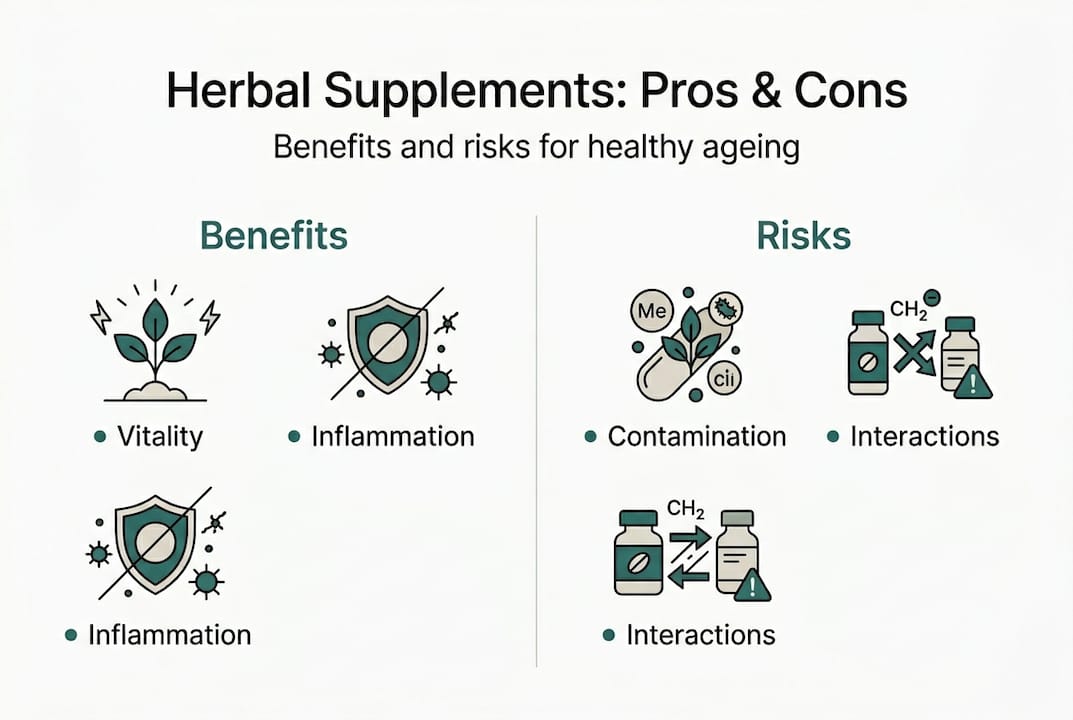
According to Johns Hopkins Medicine, while herbal supplements offer potential vitality and ageing support through antioxidants and phytochemicals, consumers should prioritise third-party tested products and consult healthcare providers due to the variability in product quality and risk of interactions.
Here is a practical step-by-step approach to choosing and using supplements safely:
- Research the specific supplement. Look for clinical evidence from reputable sources such as PubMed, the NCCIH, or the European Medicines Agency.
- Check for third-party certification. Look for NSF International, USP, or similar independent verification on the label.
- Review the ingredient list. Avoid products with long lists of unlisted fillers or proprietary blends that obscure individual dosages.
- Disclose use to your GP. This is non-negotiable if you take any prescription medication.
- Start with the lowest effective dose. Monitor your response over four to six weeks before adjusting.
- Stop immediately if you notice adverse effects. Skin reactions, digestive disturbance, or unusual fatigue warrant prompt medical attention.
“Assuming a supplement is safe because it is sold in a health shop is a logical error. The regulatory burden on manufacturers is significantly lighter than it is for pharmaceuticals, which means quality and safety verification falls largely to the consumer.”
Pro Tip: Before your next GP appointment, write down every supplement you are currently taking, including dose and frequency. Fewer than 40% of supplement users disclose this information to their clinician, which creates genuine risk of undetected interactions.
The supplement safety guide from Vivetus covers this topic in further detail, including specific interaction risks to review before starting a new regimen.
Best practices for integrating herbal supplements into your routine
Starting a herbal supplement regimen is straightforward when approached methodically. The goal is to gather useful information about your own response while minimising risk.
Certain groups require extra caution. If you are pregnant, planning surgery, or taking medications with a narrow margin of safety such as warfarin or immunosuppressants, you should avoid most herbal supplements unless specifically cleared by your healthcare provider. Monitoring liver enzymes periodically is advisable for anyone using supplements with known hepatic effects.
Practical steps for safe integration:
- Set a clear health goal. Are you targeting energy, sleep, stress, or joint comfort? Choose one or two supplements with evidence matching your goal.
- Keep a simple log. Note the date you started, the dose, and any changes you observe in energy, mood, digestion, or sleep. This data is useful both for your own assessment and for any healthcare conversations.
- Review every three months. Supplement needs change with age, health status, and season. A routine that served you well at 50 may need adjustment at 60.
- Avoid stacking multiple new supplements simultaneously. If you introduce three products at once and experience a side effect, you will not be able to identify which product is responsible.
- Buy from established, reputable brands with transparent labelling, clear country of origin information, and accessible customer support.
- Understand that supplements support a lifestyle, not replace one. Diet quality, sleep, physical activity, and stress management remain the foundation of healthy ageing.
For those just starting out, the beginner supplement guide provides a structured starting point. And if you are managing health conditions or medications, the healthy ageing safety tips section covers specific precautions worth reviewing before you begin.
Personalisation is the final and often overlooked element. No two people have the same gut microbiome, metabolic profile, or lifestyle. A supplement that delivers consistent benefits for one person may do little for another. This is not a failure of herbal medicine. It is a reminder that your body requires a tailored approach rather than a one-size-fits-all solution.
Expert perspective: What most supplement guides overlook
Most articles on herbal supplements focus on a list of benefits and a warning about interactions. That framing misses something important. The real challenge is not choosing the right supplement. It is building a practice of ongoing review and honest evaluation.
We see this repeatedly in health-conscious adults who have been taking the same stack of supplements for years without assessing whether those products still serve their current health status. The body changes. Hormonal profiles shift. Gut absorption changes with age. A supplement taken at 45 may have a different effect at 65, not because the product changed, but because the person did.
Quality and personalisation consistently outperform marketing trends. The supplement industry is not short of innovations and compelling promises. What is far rarer is a consistent, evidence-informed approach that adapts to the individual over time. The long-term supplement value of a well-chosen product from a quality manufacturer vastly exceeds the short-term savings of buying on price alone.
There is also the matter of professional input. The majority of people using herbal supplements do so without any discussion with a qualified clinician. This is understandable. GP appointments are short and supplement use can feel like a minor detail. But small adjustments, guided by someone who knows your full health picture, consistently yield better and safer outcomes than self-directed trial and error. The goal is not dependence on professional advice for every decision. It is knowing when that input is necessary and seeking it proactively.
The most effective supplement users we observe are not those who take the most products. They are those who take the fewest, most targeted products, review them regularly, and remain genuinely sceptical of claims that sound too convenient.
Enhance vitality with carefully chosen herbal bundles
Taking the step from understanding herbal supplements to actually benefiting from them requires products that match the standards described in this article. Quality matters. Evidence matters. Transparency matters.
At Vivetus, the focus is on supplements designed around scientific evidence and healthy ageing, not trends. If you are looking for a practical starting point, the Energy & Vitality bundle brings together complementary herbal ingredients selected for their clinical backing and synergistic support of energy and overall vitality. Each product in the range is chosen with quality standards and transparency in mind, giving you a reliable foundation as you build or refine your supplement routine. Free shipping is available on orders over €50.
Frequently asked questions
Are herbal supplements safe to take with prescription medication?
Some herbal supplements can interact with prescription drugs and may cause serious side effects, so always consult your GP before combining them.
How do I know a herbal supplement is high quality?
Look for third-party tested products with standardised extracts and clear labelling from reputable brands that disclose manufacturing information openly.
Can anyone safely use herbal supplements?
Not everyone should use herbal supplements. Avoid use in pregnancy, before surgery, or when taking medications with a narrow margin of safety such as warfarin.
Do herbal supplements require FDA approval?
In the US, herbal supplements are regulated as foods under DSHEA 1994 and do not require pre-market FDA approval for safety or efficacy before reaching consumers.
Can herbal supplements replace conventional medicine?
Herbal supplements can complement evidence-based medical treatments, but they should not replace professional diagnosis, prescribed medication, or standard clinical care.